To commission a portrait painting in Toronto, begin with a conversation about the image, scale, and tension you want the work to hold. I make portraits as original paintings, not as quick reproductions of a photograph.
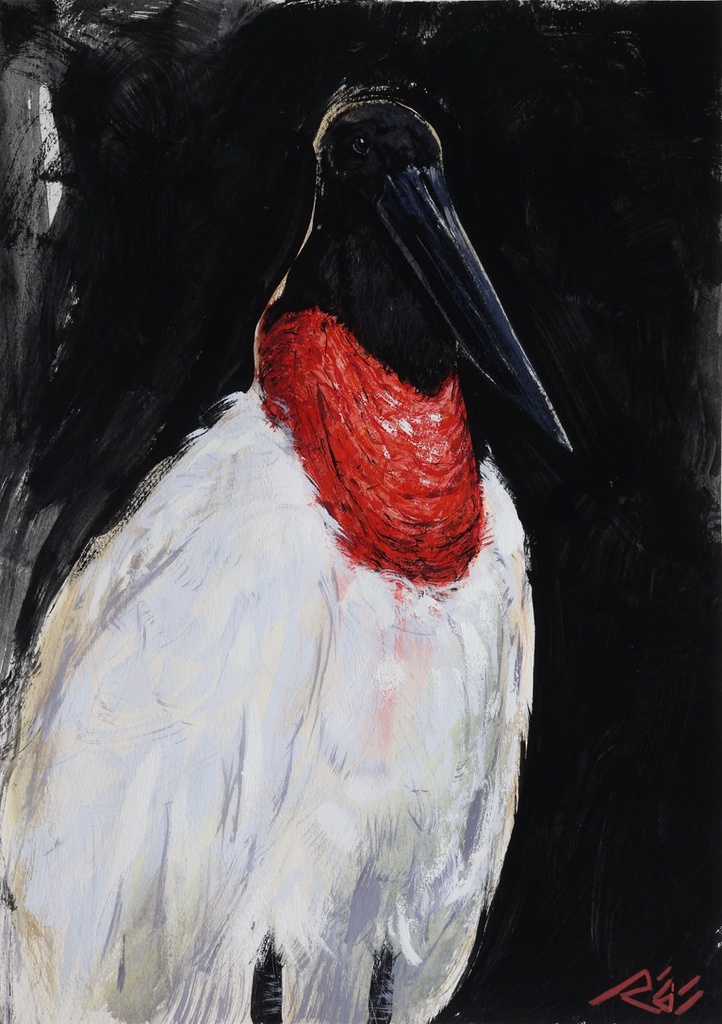
My painting Hummingbirds offers one entry into the studio. Tropical bird forms occupy a black field, where the darkness does not recede politely. It presses forward. The painting is available as an original, and it carries the same decision that guides a commission: the image must earn its place through material.
A commission is personal, but it is not private in the narrow sense. The finished work enters the continuing arc of my practice: queer resilience, painted; Brazilian memory carried through color; identity as movement rather than a fixed pose.
What a Portrait Commission Means in My Studio
A portrait commission begins with what cannot be copied by a camera. It may be a posture, a relationship to clothing, a room, a gesture, or the charged gap between how a person is seen and how they name themselves. I want to know what must remain visible.
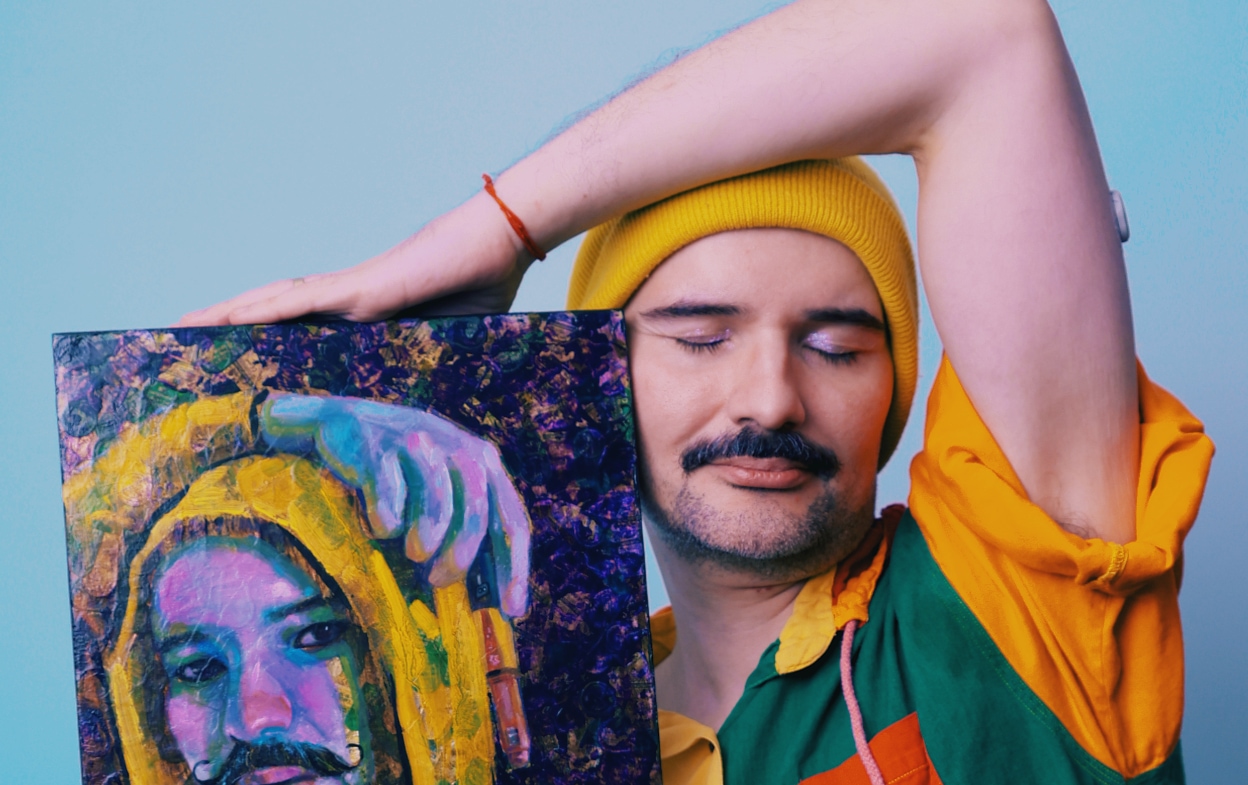
I work from photographic montage. My figures are built through images of my own body, multiplied and rearranged, with a black contour line carrying the narrative across the surface. That method matters when discussing a commission. I do not offer a neutral, photographic transcription. I make a painting with its own terms.
This is the paradox at the center of a commissioned portrait: it is made for one person, yet it becomes most truthful when it is allowed to become more than likeness. The commission holds a specific presence while entering a larger visual language of desire, discipline, belonging, and self-authorship.
For some collectors, that distinction is the point. For others, a direct likeness may be the primary need. It depends on what the painting is being asked to do. A work intended as a record calls for different decisions than one intended to live as a contemporary figurative painting in a collection.
Commission a Portrait Painting in Toronto Through Material
The surface comes first. I begin with a heavily textured gesso ground, building ridges and drags that decide how light will behave before color arrives. This is not a decorative prelude. It establishes resistance. A smooth image would tell a different story.
From there, the work moves through colored pencil, gouache, flat matte acrylic, marker, and gesso again, in the order the painting demands. Each material changes the next. Colored pencil can remain exposed as a fine insistence. Gouache can interrupt a field with opacity. Marker can sharpen a boundary that paint would soften too easily.
Every painting ends in oil. Oil is the final skin, where the earlier passages remain active beneath it rather than disappearing. During the oil phase, I follow fat-over-lean: leaner layers first, then increasingly flexible layers above them. The rule belongs to the oil structure, not to the mixed-media passages underneath.
My palette stays close to the body and to earth: raw umber, yellow ochre, burnt sienna, ivory black, buff titanium, titanium white, cadmium yellow, cadmium red, magenta, and ultramarine. Chromatic grays often organize both backgrounds and skin. They keep the figure from becoming a simple symbol.
When red is needed for pain, I use transparent alizarin crimson mixed with raw umber, never cadmium. Cadmium red has a different authority. It announces itself. Alizarin crimson sinks inward, staining the layer beneath the figure’s apparent certainty.
The result is a portrait with a physical life of its own. It can meet a collector’s image or commission brief, but it should also withstand the long looking that an original painting asks for.
The Images and Decisions I Need
The first exchange establishes the terms of the work. We discuss the desired scale, the intended setting, the visual references available, and whether the commission should be a single figure or a more layered composition. A clear sense of placement helps. A portrait above a dining table makes different demands than one acquired for a collection built around figurative work.
I also ask what the image must avoid. Sometimes the decisive information is negative: no polished corporate pose, no borrowed glamour, no false serenity. A commission becomes stronger when it has boundaries.
You do not need to arrive with a finished concept. You do need to be open to the fact that paint will alter the source. The textured gesso ground, the montage, the contour line, and the final oil layers are not effects added after the image is settled. They are how the image becomes settled.
Works such as Stone Woman, Compassion, David, and Becoming belong to this ongoing investigation. They do not present the body as a closed answer. The body is an archive under pressure, carrying memory while insisting on the present tense.
Terms, Revisions, and Collecting Directly
A commissioned painting requires a 50% non-refundable deposit before work begins. The deposit secures the commission within my studio schedule and allows the material process to move forward with commitment on both sides.
Two revision rounds are included. These rounds are for meaningful adjustments to the agreed direction, not for remaking the painting into a different project after it has found its structure. This is why the opening conversation matters. Clarity early on protects the freedom the painting needs later.
Original works are priced by size in my shop, and prints are available for selected paintings as well. For collectors considering a commission alongside existing work, the smaller paintings Kratos and Zeus offer a closer view of the scale at which line, texture, and oil can carry a figure.
Toronto is where my studio practice is based, but the work is made for collectors beyond the city. Originals and prints can be shipped worldwide. The location matters because the conversation can happen in person when useful; the painting itself is not confined by geography.
A Portrait Can Hold More Than a Face
The best commission brief is not a command to imitate. It is an invitation to make a painting that carries a person’s force without reducing them to a surface. That requires trust in the process, from the first rough gesso passage to the last oil decision.
If this is the kind of portrait you are looking for, inquiries are open. You can also join the collector list for first access to new original work, including the paintings that continue this chapter before any commission begins.