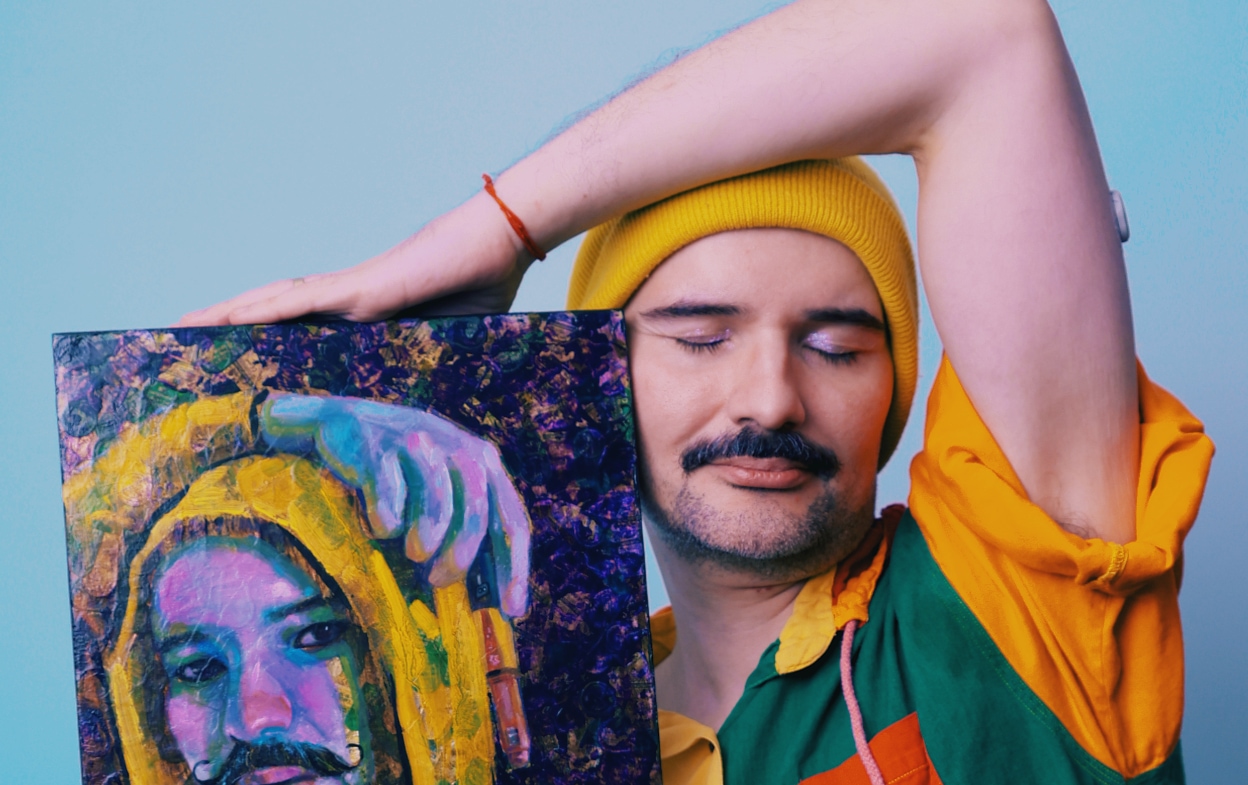
I am a Brazilian painter in Toronto making figurative paintings from the materials and memories that have shaped my life. My work begins with a surface that resists me, then becomes a place where the body can insist on being seen.
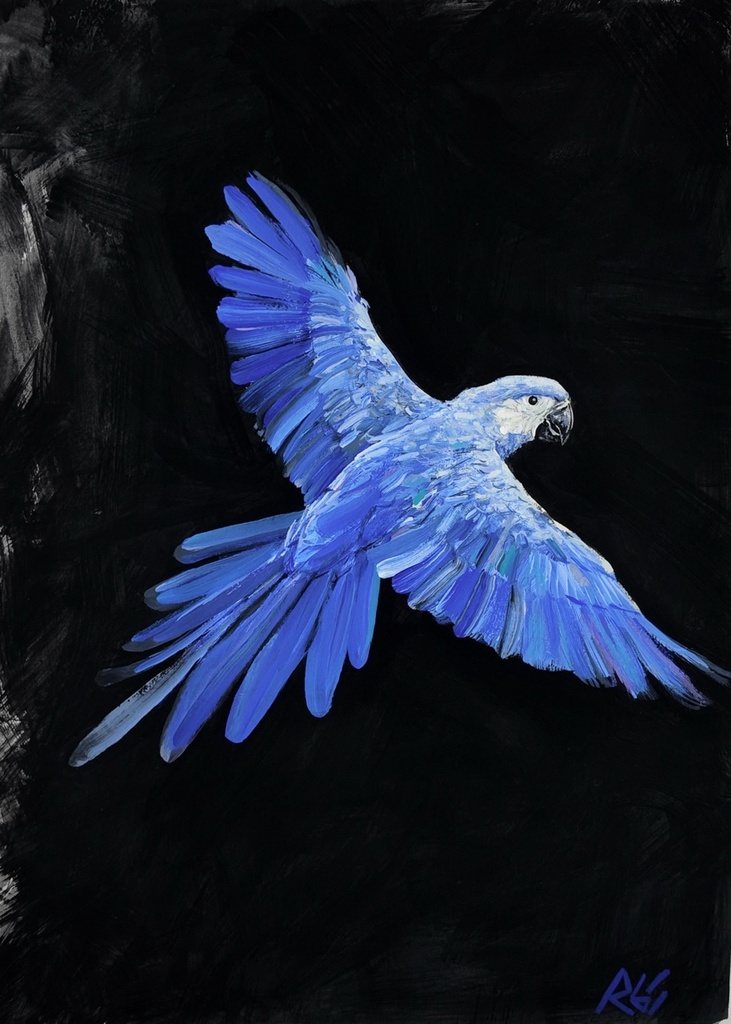
In [Hummingbirds], a black field holds tropical birds in sharp, concentrated color. The darkness is not a backdrop. It is part of the painting's pressure. The birds sit against it with the intensity of something remembered precisely, without being reduced to nostalgia.
Brazilian Painter in Toronto: A Continuing Body of Work
I was born in Brazil and trained for three years in Baroque painting in São Paulo. That training remains present in my attention to flesh, shadow, dramatic contrast, and the physical authority of oil paint. But I do not use its language to recreate another period. I use it to speak from my own body, my own time, and the conditions of queer life now.
Toronto is where this work continues to take its present form. It is a city of arrivals, private archives, chosen families, and conflicting versions of visibility. I do not treat Brazil as decoration carried into a northern city. Brazilian references enter the paintings as cultural memory: birds, color, Catholic visual residue, the charged theatricality of the body, and the word saudade when no English substitute is exact enough.
Works such as Ararinha Azul, Tuiuiú, and Peacock Feathers place tropical birds against black grounds. Each bird is specific. Each black field changes the terms of looking. The paintings hold color close rather than spreading it out, allowing pigment and darkness to negotiate the image together.
This is not a practice of restarting. Every new work is another chapter in an ongoing arc that includes painting, mixed media, digital work, video art, performance, and my novel, Malakoi. The forms change. The central question remains: what does it take to author an image of oneself when so many images have already been assigned?
The Surface Decides What the Body Can Do
The first decision in my studio is material. I build a heavily textured gesso ground, making ridges and drags that decide how light will behave across the painting. The ground is not preparation for an image. It is an active structure with its own demands.
After that, the sequence is not fixed. Colored pencil, gouache, flat matte acrylic, marker, and gesso return in the order the work demands. A line may be covered, then recovered. A matte area may need the density of oil beside it. The surface keeps a record of these changes, but not as a diary. It records pressure, correction, refusal, and choice.
Every painting ends in oil. Oil is the final skin, not the first layer. Fat-over-lean governs only the oil phase, where it belongs. This distinction matters because the work is materially mixed before it becomes an oil painting at its finish.
My palette is deliberate: raw umber, yellow ochre, burnt sienna, ivory black, buff titanium, titanium white, cadmium yellow, cadmium red, magenta, and ultramarine. I use chromatic grays in backgrounds and skin because a gray can carry more temperature and conflict than a neutral tone. When I paint red as pain, I use transparent alizarin crimson and raw umber, never cadmium red. Cadmium has another force. Alizarin crimson allows the color to remain stained, deep, and unsettled.
In I'm Perfect, But Unreal, the title names an unstable promise. Perfection can look convincing from a distance while becoming strange under sustained attention. The painting does not resolve that tension for the viewer. It gives it a body, a surface, and a line to live inside.
The Figure Is Multiple by Design
My figures begin as photographic montages of my own body. I multiply, alter, and combine photographs until the image can carry more than a single pose. The body in the painting is mine, but it is not limited to autobiography. It becomes a constructed witness.
The black contour line carries the narrative. It separates limbs, clothing, gestures, and fragments of space, while also binding them into a single event. The contour confines the figure so it can move. That is the paradox at the center of this work.
In Stone Woman, Compassion, David, and Becoming, the figure is never simply an illustration of identity. It is a site where desire, discipline, vulnerability, performance, and self-authorship meet. I want the viewer to encounter the material fact of paint before arriving at an interpretation. The body comes after the ground because the ground has already set the terms.
Small works such as Kratos and Zeus carry this same concentration at a different scale. They are not studies for larger paintings. A smaller format changes the pressure of the image. It asks the viewer to move closer and allows a gesture, contour, or color decision to hold the full weight of the composition.
Painting in Toronto, Seen in Public
My 2026 work enters public view through two exhibitions in Toronto. Beyond the Contour, a solo exhibition at The Show Gallery in April 2026, brings the line itself into focus as an image-making force. It does not merely describe form. It organizes narrative, contact, and separation.
In June 2026, Archive of Unstoppable Bodies will be presented through Pride Toronto ArtZone at CF Toronto Eaton Centre. The title names an archive that is neither distant nor neutral. Bodies are held in images, but they also exceed what an image can contain.
I am also the recipient of a 2026 Ontario Arts Council grant. I understand that support as recognition of an ongoing practice, one that is committed to figurative painting as a frontier for queer resilience, diasporic memory, and visual invention.
Acquiring Work From My Studio
Original paintings are priced by size and available through my studio, alongside prints of the same works. Hummingbirds, Ararinha Azul, Tuiuiú, Peacock Feathers, and I'm Perfect, But Unreal are available originals. Availability can change as work enters exhibitions or moves into collections, so direct inquiries are the clearest way to discuss a particular painting.
I also accept commissions. The process begins with a 50 percent non-refundable deposit and includes two revision rounds. A commission is not a request to repeat an existing image. It is an opportunity to establish a new visual relationship between subject, scale, palette, and the physical behavior of the surface.
Collectors in Toronto, across Canada, the United States, and elsewhere can acquire original work or prints from the studio. Join the collector list for first access to new paintings, exhibition news, and available works. The right painting is not only one that suits a room. It is one that continues to ask something of the room after you have lived with it.