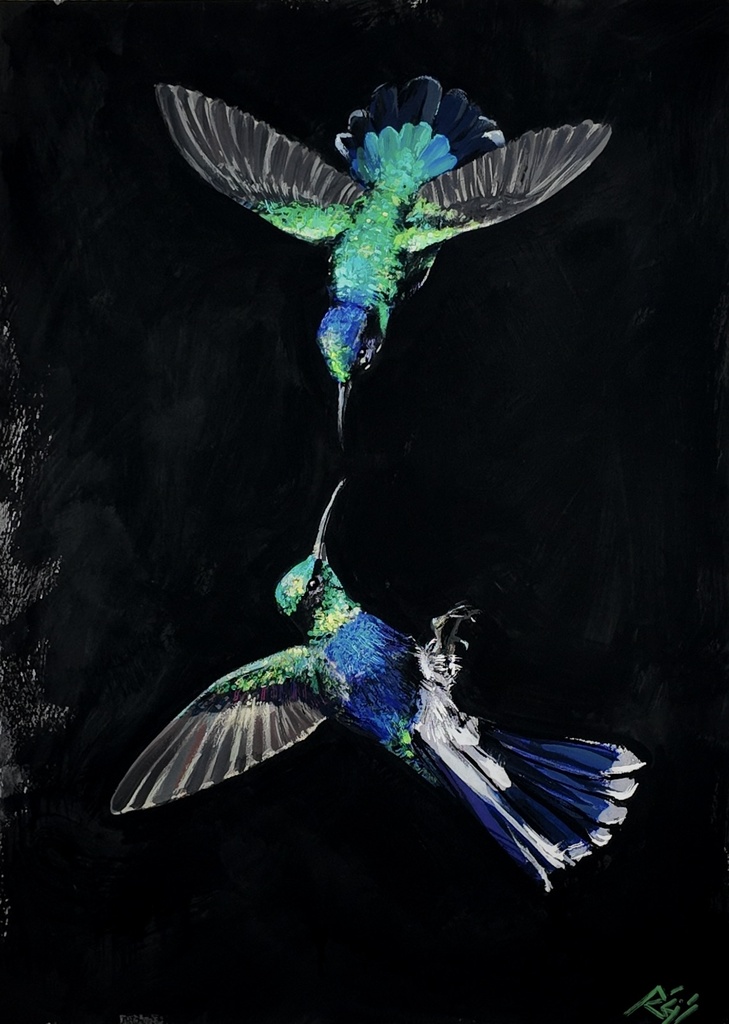
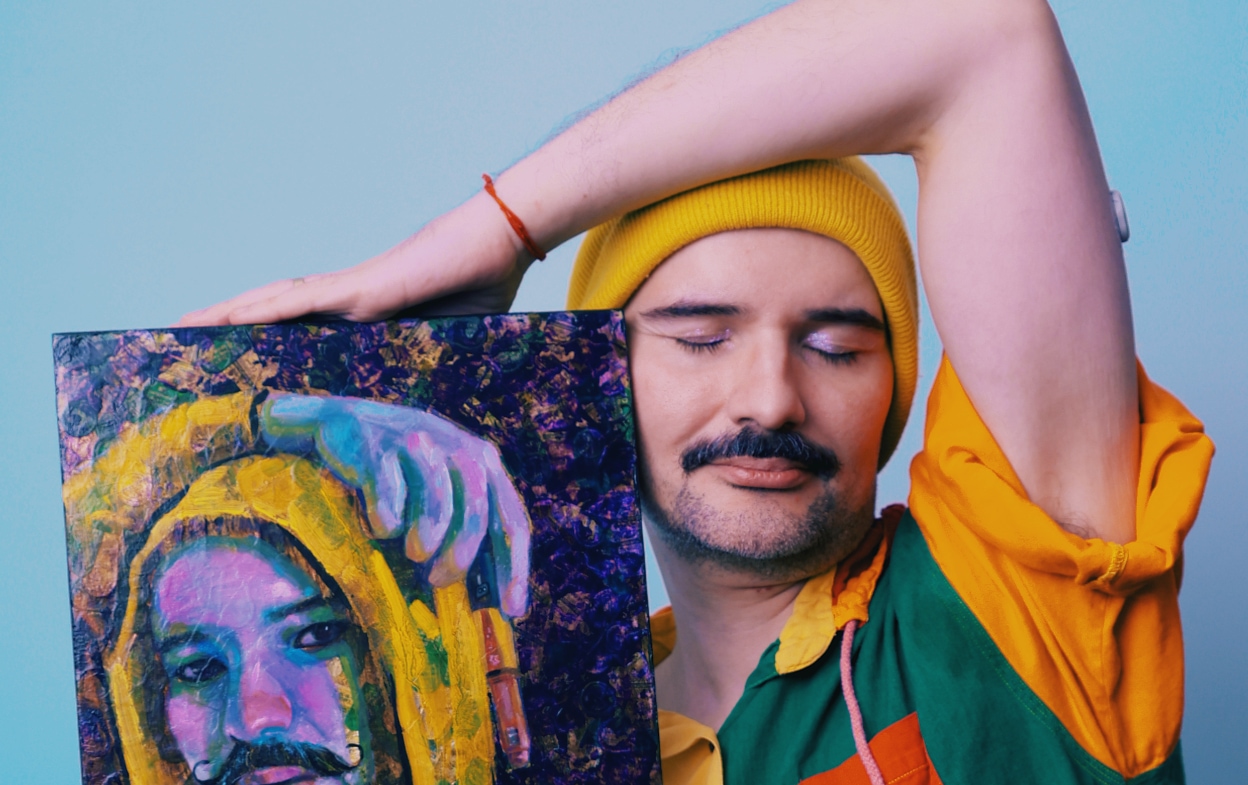
A studio is not a showroom with the mess left in. It is where decisions remain visible: gesso dragged into ridges, a pencil line interrupted, a painting turned toward the wall because it is not ready to speak. The best questions for studio visits make room for this unfinished intelligence. They help a collector or curator meet the work before the clean language of an exhibition label arrives.
I do not expect visitors to know every material in the room. I do notice when someone looks long enough to ask a question that could only come from what is actually in front of them. That attention changes the conversation. It respects the work as a living practice, not a décor decision or a compressed biography.
Begin with the matter
A strong studio conversation begins with what the work is made of. Matter carries the artist's decisions before theme, title, or market position. Ask slowly. Give the artist time to answer without filling the silence.
1. What happens first in this work?
This question opens a door without assuming the answer. Some artists begin with a photograph, a color field, a fragment of writing, or an image held in memory. In my work, the painting begins before the figure. A heavily textured gesso ground establishes ridges and drags that decide how light will move across the entire surface.
The answer reveals more than sequence. It tells you where the work locates its first conviction. Texture is never background. It is biography.
2. Which materials are carrying the most weight here?
Do not ask which materials were used as though you are reading a supply list. Ask what each one does. A material can hold time, refusal, precision, or disruption.
My layers arrive in the order feeling requires: colored pencil for fine line, gouache, acrylic for flat matte passages, markers for graphic force, then gesso again as construction. Oil arrives last, as the final skin. Each medium alters the one beneath it. A question about material becomes a question about consequence.
3. Where do you want the surface to resist the viewer?
Not every painting wants to be easy. Impasto can insist on physical space. Sgraffito can cut one sensation through another. A matte passage may refuse the seduction of shine; a glaze may hold the eye in a slower register.
This question is especially useful when a work appears immediate from across the room. It asks what becomes visible only at close range. Collectors live with paintings over time. The answer may reveal why that time matters.
4. How does light change the work?
Studio light is not neutral. Neither is the light in a home, gallery, or collection. Ask how the surface behaves in morning light, evening light, or from an oblique angle.
A textured ground can make a pale area shift from quiet to insistent. A chromatic gray can contain more color than it first permits. This is not a minor technical detail. It is part of how a painting continues to move after it leaves the studio.
Ask about decisions, not just inspiration
“Inspiration” is often too vague to be useful. It can turn years of discipline into a single romantic moment. Better questions trace how an artist chooses, edits, repeats, and refuses.
5. What did you remove or paint over to get here?
Every finished work contains decisions that disappeared from view. Ask what was abandoned, obscured, or revised. The answer often reveals the artist's standards more clearly than a statement of intention.
Sometimes a figure has been moved several times. Sometimes a color was too literal and needed to lose its certainty. In my paintings, black contour lines carry narrative, but they may arrive only after the surrounding space has argued for them. A line can clarify a body. It can also contain a body too tightly. Knowing the difference is part of the work.
6. What problem were you trying to solve?
This is one of the most generous questions a visitor can ask. It assumes the work is made through pressure, not magic. The problem may be formal: scale, color, rhythm, density, distance. It may also be a problem of representation: how to show a body without reducing it to a symbol.
Listen for specificity. An artist who can name the problem may also tell you why the solution remains provisional. That is not uncertainty. It is rigor.
7. Is this work part of a larger group or a turning point?
A studio lets you see paintings beside their siblings. Use that privilege. Ask whether a work belongs to an ongoing series, extends a prior inquiry, or interrupts it.
My paintings move through continuing arcs, including Prismatic Identity, Beyond the Contour, and Archive of Unstoppable Bodies. A new painting is not a restart. It is a new pressure placed on an existing language. This distinction matters when you are considering one work: its force may deepen when you understand the conversation around it.
8. What keeps recurring, even when you do not plan it?
Repetition is often a practice telling the truth before the artist has named it. It might be a color, a gesture, a spatial tension, a kind of face, or a certain distance between bodies.
For me, raw umber, yellow ochre, ivory black, buff titanium, and chromatic grays return with insistence. They do not function as neutral support. They build an atmosphere in which the figure can become both singular and multiplied. What repeats is not always a signature. Sometimes it is a question that has not finished asking itself.
Make space for identity without demanding confession
Artists whose work engages queer life, diaspora, race, desire, gender, or cultural memory are frequently asked to translate themselves on demand. Curiosity matters. Entitlement does not. The most useful questions stay close to the work while recognizing that lived experience shapes form.
9. How does your lived experience enter the formal choices?
This question is better than asking an artist to stand in for an entire community. It acknowledges that identity is not separate from color, scale, image-making, or composition.
I work from photographic montages of my own body, multiplied across the picture plane. The body is source material and proposition. It is not a fixed answer. Ask how an experience becomes a visual decision, and the artist can decide how far to take you.
10. Are there cultural references here that you want me to understand?
Ask, but do not presume that a reference exists for your education. Brazilian memory, for instance, is not an accessory in my work. It is a set of specific inheritances, rhythms, images, and tensions that move through the painting without needing to perform a simplified version of Brazil.
A good answer may point you toward a particular image, place, language, or artistic lineage. It may also say that the reference is meant to remain partially withheld. Both responses deserve respect.
11. What do you want to remain unresolved?
A painting can be clear without closing itself. This question invites complexity rather than demanding a lesson. It is particularly valuable with figurative work, where viewers can rush to assign a stable narrative to every gesture.
Unresolved space is not an absence of thought. It may be where the work protects its contradictions: visibility and concealment, seduction and refusal, intimacy and distance. Stay with that tension. It is often where the painting has its longest life.
12. What should I spend more time looking at?
This is a simple question, but it changes the tempo of a visit. It gives the artist permission to direct your eye toward an edge, a buried layer, a shift in scale, or a decision you passed too quickly.
Sometimes the answer will be technical. In my work, it may be the transparent alizarin crimson mixed with raw umber - a red of pain that glows from inside the layers rather than sitting on top. Sometimes the answer will be spatial: the interval between figures, the pressure of a contour, the silence in a background. Either way, return to the work and look again.
Questions to leave outside the studio
Avoid asking an artist how long a work took as though duration settles value. Avoid asking what it means before asking how it is built. And avoid treating purchase as an awkward subject that must be disguised.
If a work stays with you, ask whether it is available, how the artist thinks about placement, and what documentation accompanies it. Those are direct, serious collector questions. They recognize that acquisition is not separate from attention. It is one way attention can become commitment.
A studio visit does not need to produce an immediate answer. Let one precise question lead to another. Then let the painting keep speaking after you have left the room.