Toronto exhibition examples are most useful when they show more than a finished installation. They show what a painting carries into public view, and how a body, a surface, and a history can hold their position together.
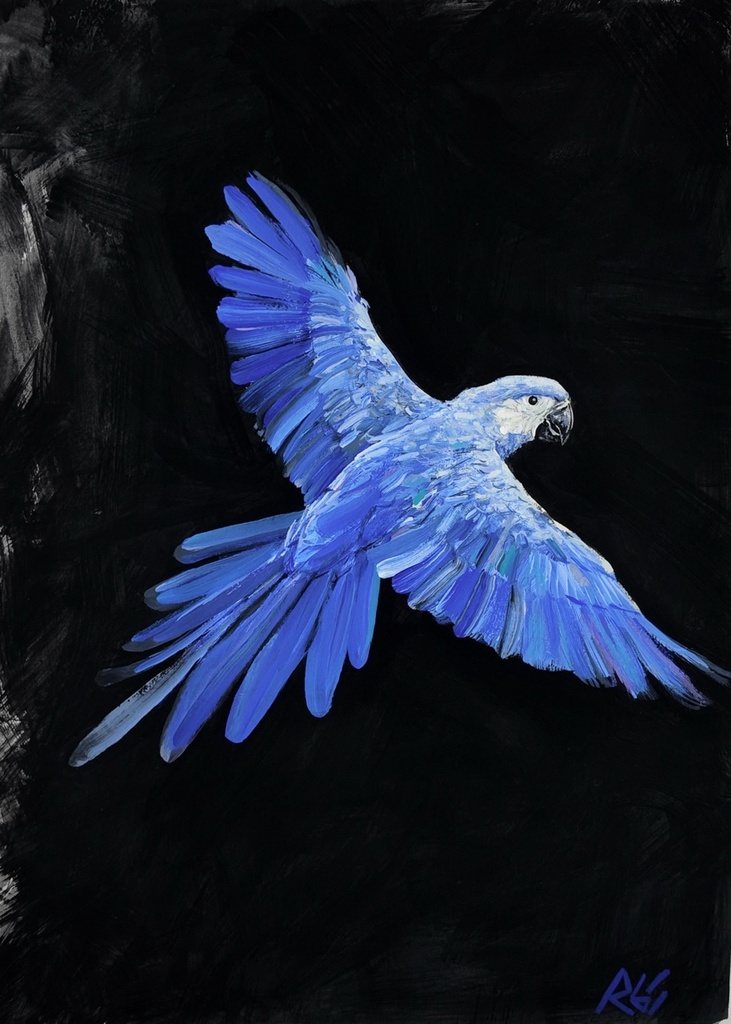
I return to Peacock Feathers, where tropical birds occupy a black field. The black is not empty. It compresses the color around it, making the bird imagery read as presence rather than decoration. This piece is available as an original, alongside prints, through my studio.
Toronto Exhibition Examples: Two Public Chapters
In 2026, my work appeared in two distinct Toronto contexts: Beyond the Contour, a solo exhibition at The Show Gallery in April, and Archive of Unstoppable Bodies at Pride Toronto ArtZone in CF Toronto Eaton Centre in June. They were not interchangeable presentations. Each clarified a different condition of the work.
A solo exhibition gives the paintings enough room to argue with one another. Repeated bodies, black contour lines, chromatic grays, and passages of red can accumulate across a room. A painting is never merely an isolated image in that setting. It becomes one sentence in a larger grammar.
The ArtZone presentation placed the work in a public commercial center during Pride. That context changed the speed of looking. People encountered the paintings while moving through a shared space rather than entering a quiet gallery with a fixed expectation. The work had to remain legible at a distance, then sustain a closer look. The contour did that work first.
The contour contains the body, but it also gives the body room to exceed containment. That tension is central to my figurative painting. Identity is movement, even when the figure is still.
These exhibitions are Toronto exhibition examples because they demonstrate two real conditions of contemporary painting in the city: concentrated viewing inside a gallery and unplanned encounter in a public cultural program. Neither is more serious than the other. Each asks a different question of scale, placement, and attention.
The Surface Decides What the Body Can Do
My process begins with a heavily textured gesso ground. I build ridges and drags into the surface before the figure is resolved. Those marks decide how light behaves across the painting. They also refuse the false cleanliness often expected of a painted body.
After that first ground, I work with colored pencil, gouache, flat matte acrylic, marker, and gesso again, in the order each work demands. Every painting ends in oil. Oil is the final skin, not the beginning of the image. Fat-over-lean governs only the oil phase, where it belongs.
That sequence matters in an exhibition because the paintings do not perform the same way under changing light. A matte acrylic passage can sit back. An oil passage can hold or release a reflection. A gesso ridge can interrupt the figure’s outline. These are not technical effects applied after the subject. They establish the terms under which the subject becomes visible.
My palette returns to raw umber, yellow ochre, burnt sienna, ivory black, buff titanium, titanium white, cadmium yellow, cadmium red, magenta, and ultramarine. The red associated with pain is transparent alizarin crimson mixed with raw umber, never cadmium. Cadmium red has its own force, but it does not carry the same inward density.
Chromatic grays matter just as much as saturated color. They sit in backgrounds and skin, preventing either from becoming a simple symbol. In a gallery, those grays give the eye somewhere to remain after the first image has registered.
A Figure Is Not a Single Body
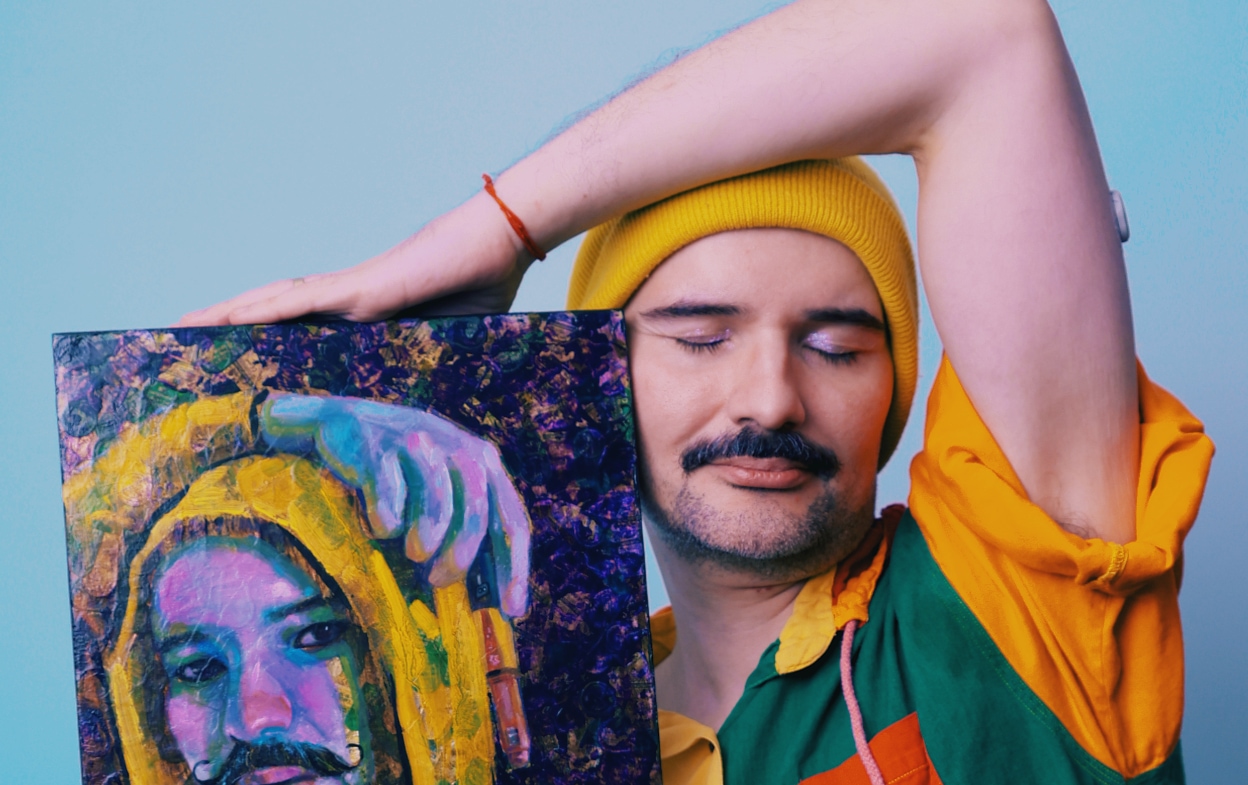
The figures in my paintings begin as photographic montages of my own body, multiplied and rearranged. I do not use the body as a stable self-portrait. I use it as available material: a source that can be repeated, divided, posed, and made strange without becoming anonymous.
This is visible in works such as Stone Woman, Compassion, David, and Becoming. Their subjects do not offer a neat answer about gender, desire, or belonging. They place those subjects in the painting’s construction: a line that interrupts a shoulder, a color field that turns a face away from certainty, a layered ground that refuses a smooth boundary.
Queer resilience, painted, is not a slogan for me. It is a formal demand. The work must withstand looking without simplifying the life that made it. Brazilian memory enters the same way. It is not an atmosphere added for recognition. It is carried in color, in the discipline of figuration, in the cultural memory that remains active after migration.
My three years of Baroque training in São Paulo gave me a lasting attention to the weight of bodies and the drama of light. But the work does not reproduce Baroque painting. It argues with inheritance. A body can be staged and still resist the stage.
What Collectors Can Look for in an Exhibition
For collectors and curators, an exhibition can reveal what an individual image cannot: whether the artist’s decisions hold across different works. In my practice, that continuity appears through material choices before it appears through subject matter. The textured ground, black contour, photographic multiplication, and layered paint create a visual language that persists while each painting changes its terms.
Look at the bird paintings - Hummingbirds, Ararinha Azul, Tuiuiú, and Peacock Feathers. Their black fields create a concentrated setting for tropical bird imagery. They are not studies of nature detached from biography. The birds hold color against darkness, carrying Brazilian visual memory without turning it into ornament.
Then consider I’m Perfect, But Unreal. The title names a contradiction that contemporary portraiture often tries to conceal. Perfection can be a performance. Unreality can be a condition of being seen. The painting does not resolve that contradiction by making the figure more agreeable.
Smaller works such as Kratos and Zeus offer another scale of encounter. A small painting can concentrate pressure rather than reduce it. For a collector, scale changes the relationship to a work. It changes where the painting can live, certainly, but it also changes how quickly the image claims attention.
Originals are priced by size in my shop. Prints extend the same images in another format, while commissions allow a more direct conversation around scale, reference, and intended setting. Commission inquiries are open with a 50 percent non-refundable deposit and two revision rounds. The structure is clear because the painting still needs room to decide itself.
Exhibition as an Ongoing Archive
Beyond the Contour and Archive of Unstoppable Bodies belong to an ongoing arc, not a completed statement. The paintings continue to ask how a figure can hold its ground without becoming fixed, and how a painted surface can carry desire, discipline, diaspora, and refusal at once.
Toronto remains meaningful here because its exhibition spaces bring different publics into contact with the work. Gallery visitors, passersby, collectors, artists, and cultural institutions do not arrive with identical expectations. A painting should not flatten itself to meet them. It should offer enough formal clarity that the encounter can begin, then leave something unresolved.
If you are considering an original, begin with the work that continues to return to you after the first look. Peacock Feathers, Hummingbirds, Ararinha Azul, Tuiuiú, I’m Perfect, But Unreal, Kratos, and Zeus are available through my studio. Join the collector list for first access to new work and exhibition announcements.