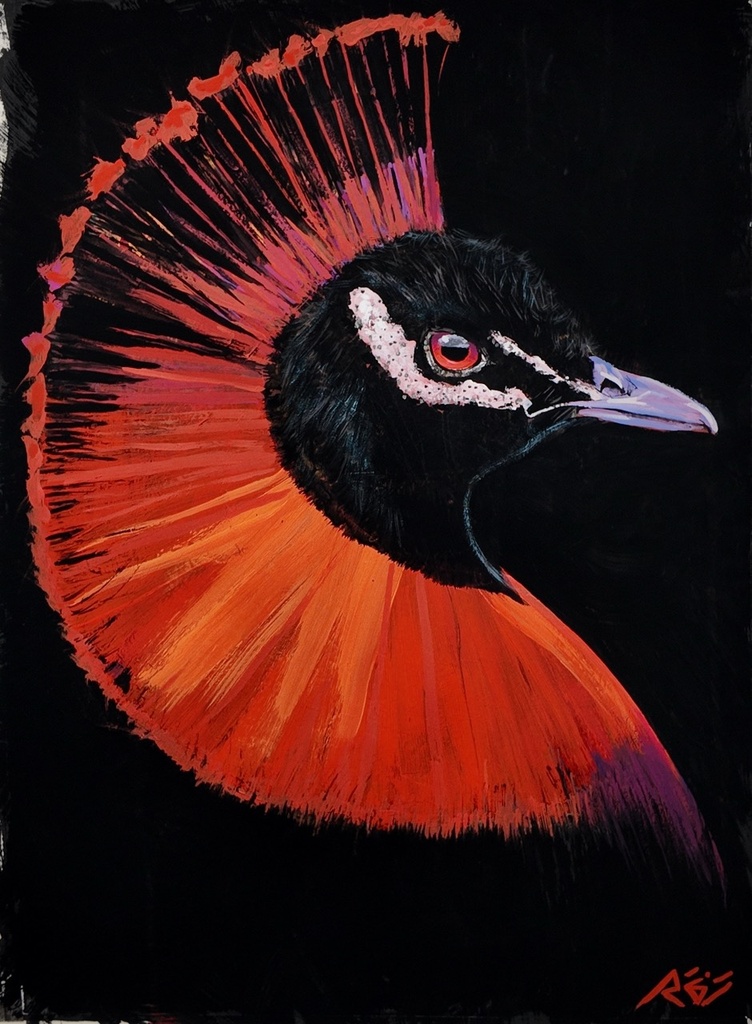
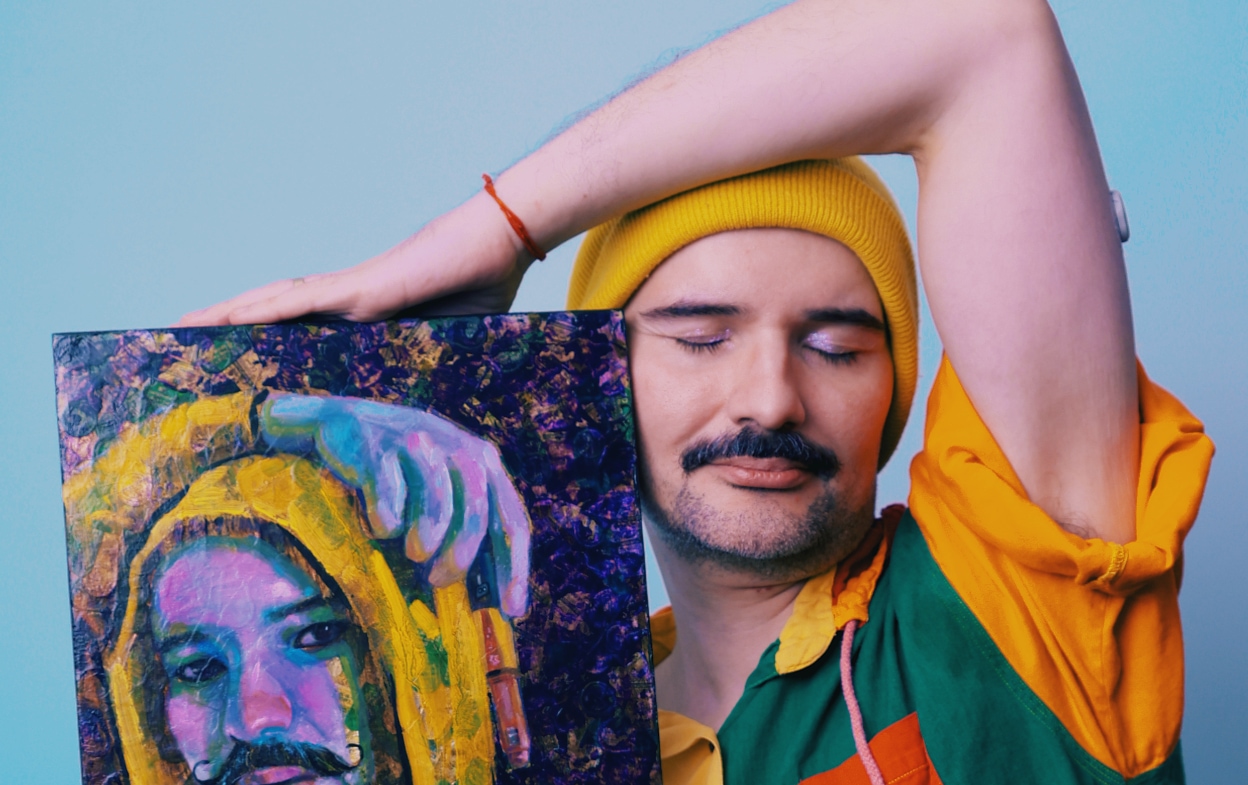
A dragged ridge of gesso catches light differently at noon than it does after rain. That small shift matters to me. Before a figure arrives, before a black contour gathers a narrative, the surface has already made its demands.
This is where I locate my contribution to Toronto art: not in an image of the city, but in its pressure. Toronto is polished and unfinished at once. Glass rises over older brick. Languages overlap in one line at a café, a gallery opening, a streetcar platform. The city keeps asking who gets to appear, who is archived, and who is permitted to take up space.
I begin with matter because matter does not lie. Texture is never background - it is biography.
Toronto art is not one clean image
Toronto art is often described through its institutions, neighborhoods, fairs, and openings. Those structures matter. They create visibility, establish context, and sometimes determine what enters a collection. But they are not the whole scene.
The more vital Toronto exists in the friction between official culture and lived culture. It is present in an artist working late in a west-end studio, in the informal exchange after a performance, in a painting carried carefully through an apartment hallway because the elevator is too small. It is in communities that make work before permission arrives.
For queer artists, this distinction is not abstract. Visibility can be offered while authority remains withheld. Representation can appear without changing who is allowed to shape the terms of representation. A figure on a wall is not automatically free.
That is why I return to self-authorship. My figures are built from photographic montages of my own image, multiplied and rearranged. They are not portraits in the conventional sense. They are propositions. A single presence becomes several. Desire meets witness. Memory refuses to remain still.
The surface makes the figure possible
Each painting begins with a heavily textured gesso ground. I build ridges, drags, and interruptions into the support before color enters. These marks decide how light will move across the entire painting. They establish resistance.
Then the layers arrive in the order the feeling requires: colored pencil for fine line, gouache, acrylic for flat matte passages, markers for graphic insistence, then gesso again as construction. Oil comes last. It is the final skin.
This sequence is not a stylistic trick. It gives each material a different responsibility. Acrylic can hold a blunt field of color. Pencil can whisper or scrape. Marker can make a contour feel like a sentence spoken without hesitation. Gesso can cover, interrupt, or rebuild what seemed settled.
Only in the oil phase does fat-over-lean govern the process. By then, the painting has accumulated its own history. Oil does not erase that history. It seals it into a more complex present.
My palette stays close to earth and pressure: raw umber, yellow ochre, burnt sienna, ivory black, buff titanium, titanium white, cadmium yellow, cadmium red, magenta, and ultramarine. Chromatic grays recur in backgrounds and skin. They resist easy atmosphere. A gray can contain several colors at once. So can a person.
The red of pain is not cadmium. It is transparent alizarin crimson mixed with raw umber, glowing from inside the layers. It does not announce itself immediately. It waits.
A city of layers, not a single style
Toronto rewards quick categorization and resists it at the same time. It can be tempting to sort the city into clean identities: commercial or experimental, local or international, decorative or political, figurative or abstract. The strongest work often makes those divisions feel inadequate.
Figurative painting, for example, is sometimes treated as a return to something familiar. But familiarity is not simplicity. A painted figure can carry migration, class, language, intimacy, performance, and the long negotiation of being seen. It can also carry formal decisions that are exacting: the tension between flatness and depth, the force of an outline, the temperature of a shadow, the physical evidence of a brushstroke.
Impasto is what occupies physical space in a life. Accumulated glazes are chronic, slow time. Sgraffito is one sensation cutting through another.
These are material facts. They also become emotional facts. The painting does not need to explain every one of them. It needs to hold them.
My Brazilian memory enters this work in that spirit. Not as an imported visual shorthand, and never as decoration. It enters through the rhythms that formed me, through color, through contradiction, through the knowledge that identity is made between places. Saudade is not nostalgia alone. It is distance with a pulse.
Toronto gives that pulse another setting. Here, diaspora is not a side note to culture. It is one of culture’s engines.
What collectors can look for
Collectors approaching contemporary Toronto art do not need to seek a single local style. A stronger question is whether a work has its own internal necessity. Does the material language carry the subject? Does the image continue to unfold after the first encounter? Does the artist’s point of view remain present when the work is installed away from the noise of an opening?
Scale matters, but not by itself. A compact work can exert enormous pressure when its surface is alive. A larger painting can dominate a room yet remain visually thin. The trade-off is not between intimacy and impact. It is between an image that merely occupies a wall and one that changes the room around it.
For collectors living with figurative work, this distinction becomes especially clear over time. A painting should not exhaust its meaning on arrival. It should keep changing with light, distance, and the viewer’s own shifting attention. The contours may become more insistent. A buried color may rise forward. A face may become less important than the space around it.
This is also why acquiring directly from an artist can matter. The work arrives with its materials, its chronology, and its continuing arc intact. A painting is not a detached object. It is a chapter.
The figure keeps moving
My ongoing series, Prismatic Identity, holds identity as movement rather than a fixed declaration. The figures do not resolve into one stable position because lived experience does not. They gather, split, overlap, and return.
This movement continues in Beyond the Contour, presented in Toronto in 2026. The contour is not a border that contains the figure. It is an active force. It presses outward. It records the insistence of being here.
Archive of Unstoppable Bodies, presented with Pride Toronto at CF Eaton Centre in 2026, extends that question into public space. An archive can preserve. It can also exclude. I am interested in the archive as a site of revision, where queer presence is not treated as a footnote or a recovered fragment, but as a force that has always altered the record.
Toronto art becomes meaningful when it can hold that complexity without smoothing it away. It should make room for beauty without turning beauty into escape. It should acknowledge the market without confusing price with consequence. It should welcome viewers while refusing to become harmless.
A painting can be sensual and disciplined. It can be direct and difficult. It can carry a private history into public view without surrendering its mystery.
The work continues from the surface outward. New paintings and prints are available directly from the studio, and inquiries are open. Join the collector list for first access to future chapters.
Look closely at the ground before you look for the figure. The surface may already be telling you who had to insist on appearing.