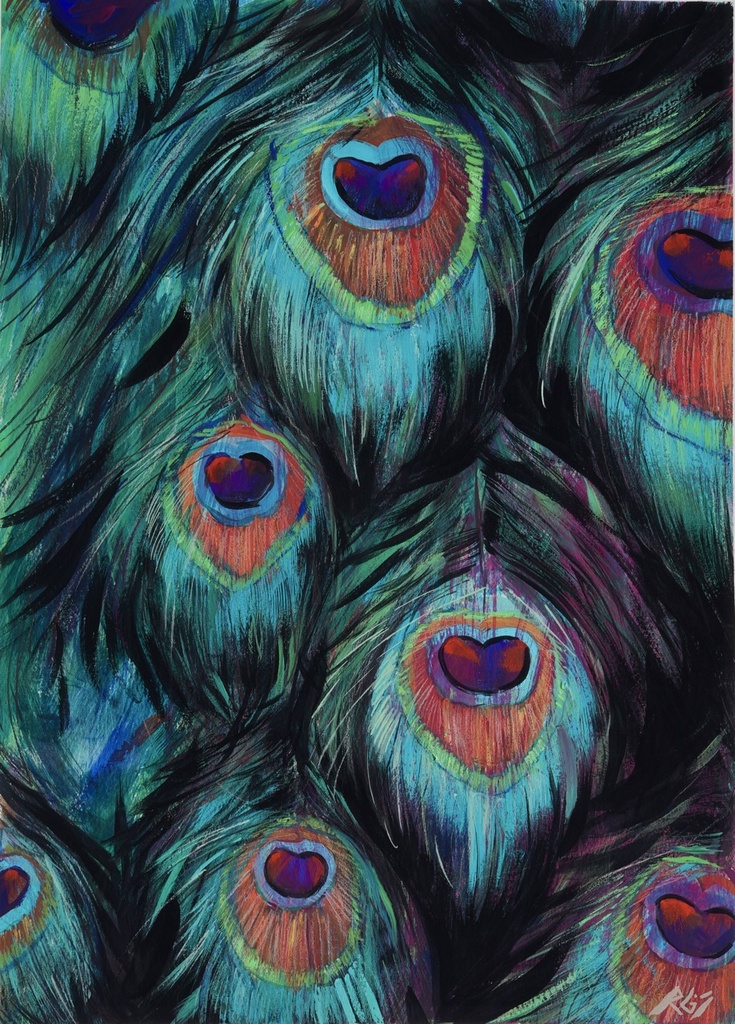
A ridge of gesso catches light before a figure arrives. It can hold a shadow, interrupt a line, or make one area of color refuse to behave like the next. This is where oil versus acrylic becomes more than a studio question. It determines the tempo of a painting, the kind of surface it can carry, and what remains visible after the image has declared itself.
I do not treat the two materials as rivals. Each has a distinct authority. Acrylic can state. Oil can linger. One gives me a matte interruption; the other gives me a final surface with depth, drag, and a particular resistance to light.
For collectors, this distinction matters because a painting is never only its subject. The figure may be the first encounter. Matter is the longer conversation.
Oil Versus Acrylic Begins With the Ground
My paintings begin with heavily textured gesso. I build ridges, drags, breaks, and raised passages before constructing the figures. The ground decides how light will move across the work. Texture is never background - it is biography.
A smooth support asks color to perform one way. A textured one makes every later decision physical. A black contour may snag on a ridge. A transparent glaze may settle into a low point and leave the high passage exposed. An impasto mark can become a fact in the room, not simply an image of one.
Gesso returns throughout my process as construction. It may cover, divide, or rebuild a passage that has become too obedient. This is not correction in the polite sense. It is pressure. The surface needs a history before it can hold one.
Acrylic belongs naturally to this early and middle architecture. It dries quickly into flat matte passages that let me establish planes, interruptions, and areas of visual silence. It is especially useful when the painting needs a clear shift in tempo: a field that will not reflect, a block of color that sits forward without dissolving into atmosphere.
That speed has consequences. Acrylic asks for decisions while the decision is still hot. It can be revised, layered, sanded, or covered with relative immediacy, but it does not offer the extended negotiation of oil. Its directness is a strength. So is its refusal to wait.
What Acrylic Can Say
In my studio, acrylic is one voice among several. Colored pencil brings fine line. Gouache offers an opaque, absorbent interruption. Markers introduce graphic insistence. Acrylic establishes matte passages. Gesso returns as a material force.
These layers do not follow a fixed recipe. They arrive in the order the feeling demands. A painting may need a colored-pencil trace before a broad acrylic plane. Another may need gouache to break the certainty of a marker line. The sequence is not decorative. It establishes what can be seen, and what must remain partially buried.
Acrylic excels at clarity. Its color can remain clean and graphic, especially when I need a passage to sit apart from the slower, more reflective character of the oil that comes later. It lets a painting contain different registers at once: the graphic and the atmospheric, the immediate and the accumulated.
But acrylic is not simply the convenient choice because it dries fast. Convenience is not an aesthetic position. Its matte finish absorbs light differently from oil, often making a passage feel more fixed, more declared. That can be exactly right. It can also be too final if the work needs optical depth or a longer visual delay.
For this reason, acrylic does not replace oil in my practice. It prepares a condition that oil can complicate.
Matte is not lesser
A matte passage can be as forceful as a glossy one. It can make a saturated color feel withheld rather than loud. It can give the eye a place to stop before it enters a glaze or follows a contour through a dense field.
The distinction is not hierarchy. It is contrast. A painting gains charge when different surfaces ask different things of light.
Why Every Painting Ends in Oil
Every painting is finished in oil. Oil is the final surface, but not a cosmetic finish. It is the last skin of the work: the layer where all earlier decisions remain present, altered by translucency, reflection, and time.
Oil gives me open time. I can pull one color through another, soften an edge without erasing it, or leave a brush mark unresolved until it becomes necessary. It allows for glazes that carry color inward rather than merely across the surface. Accumulated glazes hold slow time. They make duration visible.
My palette is grounded in raw umber, yellow ochre, burnt sienna, ivory black, buff titanium, titanium white, cadmium yellow, cadmium red, magenta, and ultramarine. These colors are not a fixed system. They are a vocabulary with memory.
The red of pain is not cadmium red. It is transparent alizarin crimson mixed with raw umber, glowing from inside the layers. Cadmium can announce. Alizarin crimson and raw umber can smolder. The difference is material, but it is also emotional.
I often desaturate with black or with complementaries. Chromatic grays recur in backgrounds and across the figure. They make brighter passages earn their intensity. A white that is not white can hold more tension than a field of pure titanium white.
Oil also makes sgraffito possible in a particular way. Scratching through a wet passage is one sensation cutting through another. It is not illustration. It is an event in the surface.
The Technical Rule Is Simple, the Painting Is Not
Oil over acrylic is a sound working structure when the acrylic and underlying layers are fully dry and stable. Acrylic over oil is not a reversal I use. The materials do not share the same behavior, and the painting should not be asked to carry an avoidable conflict.
The familiar fat-over-lean principle governs only the oil phase. As oil layers build, later layers need greater flexibility than those beneath them. This is not a rule for the mixed-media stages. It is a discipline for the final oil construction.
That distinction matters. Artists sometimes discuss oil versus acrylic as though one must choose a single medium and remain faithful to it. I see fidelity differently. A material deserves to be used for what it can do, not for a myth of purity.
Oil gives luminosity, extended revision, and the possibility of depth that shifts as a viewer moves. Acrylic gives speed, opacity, and matte refusal. Together, they let a surface argue with itself. The argument is often where the painting becomes alive.
The Figure Arrives After the Surface Has Spoken
The figures in my work begin as photographic montages of my own form, multiplied and rearranged. They are not placed onto neutral ground. They enter a field that already has weather, resistance, and direction.
Black contour lines carry the narrative. They bind and separate. They can hold a figure together while allowing the surrounding paint to push against certainty. In this way, figuration becomes less about describing a person than about staging presence under pressure.
Impasto occupies physical space in a life. A thick mark does not only represent force; it has force. A glaze can make one moment remain beneath another without disappearing. A scratched line can interrupt a polished passage and deny the fantasy that identity arrives whole.
This is where material and subject meet without becoming illustration. Queer resilience, painted, is not a slogan placed over an image. It is a contour that persists through layers. It is color made to carry contradiction. It is a surface that refuses to become flat.
Choosing What You Want to Live With
For a collector, the question is not whether oil is superior to acrylic. The more useful question is what kind of looking the painting sustains. Acrylic passages may give the work its graphic architecture. Oil may draw you closer through changing reflection and layered color. Gesso may make the light alter from morning to evening.
A painting built this way does not offer one fixed encounter. It keeps its earlier marks active. From a distance, the figure may lead. At close range, the ground takes over. Then a line, a glaze, or a small ridge redirects the entire image.
The work continues as part of an ongoing arc: identity as movement, not a solved condition. Original paintings and prints are available directly from the studio. Inquiries are open, and the collector list offers first access to new work.
Choose the painting that keeps changing when the light changes. That is often where it has begun to tell the truth.