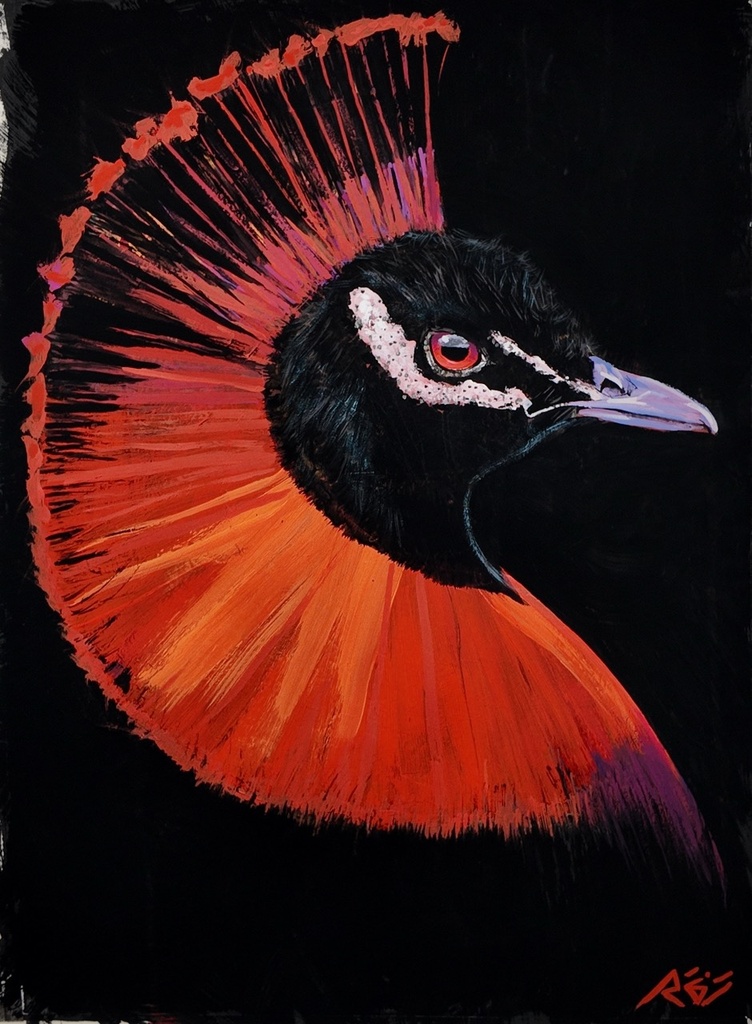
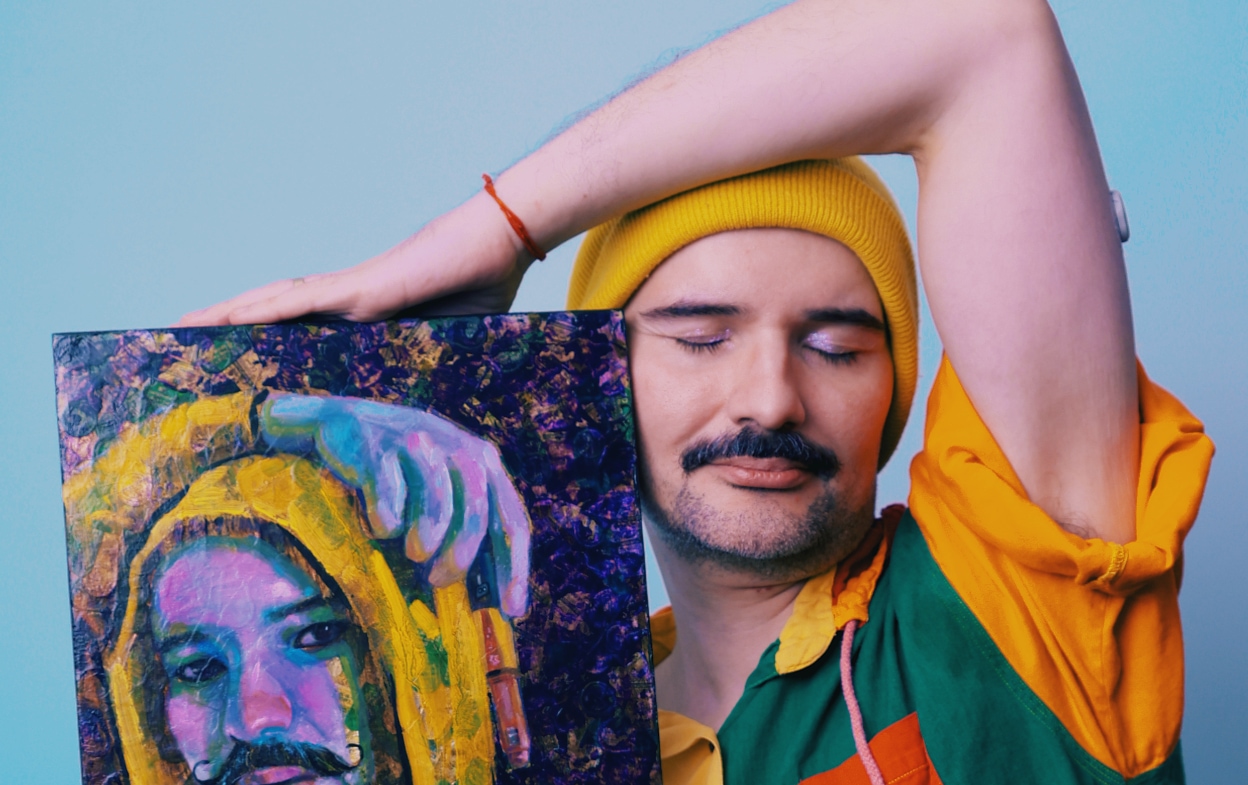
A ridge of gesso catches light before a figure does. A dry marker line interrupts a field of buff titanium. Oil settles last, not as a correction but as a final decision. To understand how to interpret painted bodies, begin there: not with the subject’s presumed story, but with the physical evidence of how the painting was made.
A painted body is never only an image of a person. It is pressure, sequence, refusal, rehearsal. It is a surface that has had to hold multiple decisions at once.
How to interpret painted bodies: begin with matter
The first question is not Who is this? It is What is this surface doing?
In my work, every painting begins before the figure. I build a heavily textured gesso ground, creating ridges, drags, pockets, and interruptions. These marks decide how light will move across the whole painting. They remain active beneath every later layer. Texture is never background - it is biography.
Look at the painting from an angle if you can. Notice where the light stops, where it skims, where it catches. A smooth area may make the figure feel suspended or withheld. A raised passage can insist on physical presence. Impasto occupies actual space. In a painted body, it can register what has become too substantial to keep invisible: desire, resistance, labor, memory, joy.
This does not mean that every thick mark has one fixed translation. Interpretation is not a codebook. But material choices establish the terms of encounter. A surface that refuses to lie flat asks the viewer to slow down. It asks for attention before recognition.
Read layers as time, not decoration
After the gesso ground, my materials arrive in the order the feeling demands: colored pencil for fine line, gouache, acrylic for flat matte passages, markers for graphic interruption, then gesso again as construction. Oil comes last.
Each medium keeps its own behavior. Colored pencil can whisper or scratch. Gouache can sit dry and opaque against the ground. Acrylic holds a matte block of color. Marker is immediate, almost declarative. Gesso can erase, cover, divide, or build a new architecture inside the image.
When you see these materials coexisting, resist the urge to flatten them into a single style. Ask what each one is allowed to do. A delicate pencil trace beside an opaque field may create hesitation against certainty. A graphic marker line crossing an earlier painted form may feel like an argument that arrived late but would not be denied.
The order matters because time matters. An accumulated glaze carries slow time. It suggests an experience that did not happen once and disappear. Sgraffito, by contrast, is immediate. It is one sensation cutting through another. These are formal decisions, but form is where the painting tells the truth.
Follow the contour before reading the face
Black contour lines carry much of the narrative in my figures. They do not simply describe an edge. They separate, connect, multiply, and sometimes contradict the forms they hold.
A contour can make a body legible, but it can also make legibility unstable. Follow the line. Does it close around the figure, protect it, fracture it, or push it into another figure? Does it repeat? Does it become too heavy in one place and nearly disappear in another?
This is especially useful when a painted body is built through montage. My figures begin with photographic montages of my own body, multiplied into new arrangements. The result is not portraiture in the conventional sense. One body may become several. A gesture may belong to one image while the surrounding structure comes from another. The figure is assembled, but it is not artificial. It is authored.
Multiplicity changes the terms of looking. Instead of asking whether the body is realistic, ask how it occupies the painting. Is it gathering itself? Splitting open? Performing for an imagined witness? Refusing a stable pose? The body can be recognizable and still remain unresolved. That unresolved quality is often the point.
Let color reveal the painting’s temperature
Color is emotional structure, not a mood label pasted onto the surface.
Raw umber, yellow ochre, burnt sienna, ivory black, buff titanium, titanium white, cadmium yellow, cadmium red, magenta, and ultramarine form a vocabulary with history and friction. Earth colors can anchor a figure without making it passive. Ultramarine can open distance. Magenta can sharpen a passage into an event. Chromatic grays recur across backgrounds and bodies because neutrality is rarely neutral.
Pay attention to colors that seem to cancel one another. Desaturation through black or complementary color can make a field feel held back, weathered, or quietly charged. A gray may contain blue, orange, green, or red beneath its restraint. A white may contain ochre, umber, or violet. It is a white that is not white.
The red of pain in my paintings is not cadmium. It is transparent alizarin crimson mixed with raw umber, glowing from inside the layers. This distinction matters. Cadmium red arrives at the surface with force. Alizarin crimson and raw umber produce a deeper register, one that seems to have traveled through the painting before becoming visible.
When interpreting color, ask whether it sits on the surface or seems to come from beneath it. One is an announcement. The other is an accumulation.
Read the body as a site of self-authorship
Only after matter, layer, contour, and color should the larger questions arrive. A painting may address queer life, diasporic memory, belonging, Brazilian cultural inheritance, or resilience. But these themes do not exist above the paint. They are made credible through the paint.
For a queer figurative painting, visibility is never a simple matter of showing a body. Visibility can be exposure. It can be staging. It can be a form of protection. It can be the right to become excessive, tender, erotic, fragmented, or difficult to categorize.
This is why a multiplied figure matters. It refuses the demand for a singular, settled self. Identity is movement. A body can carry past and present at once. It can be intimate without becoming available for consumption. It can hold beauty and friction in the same contour.
Brazilian memory enters this field as lived material, not ornament. It may appear through color logic, visual rhythm, or the internal collision of warmth and shadow. It does not need to arrive as a symbol for the viewer to recognize it as cultural memory. Some things are carried in the hand before they become language.
Give the painting more than one encounter
A quick reading will often find the figure. A longer reading finds the conditions that made the figure possible.
Return to the edges. Return to the areas that first seemed secondary. Look for the gesso rising through a painted passage, the pencil line that remains visible under oil, the glaze that changes as light changes. Notice what the painting lets you see immediately and what it makes you earn.
Collectors often live with a painting longer than anyone else. That duration is part of the work’s value. A strong figurative painting does not exhaust itself at first glance. It keeps rearranging the room, the light, and the viewer’s attention.
When you stand before painted bodies, do not rush to name what they mean. Let the material lead. The figure will meet you there, already carrying more than one life.