A glaze begins after the surface has already made its first decision. Before a figure enters my paintings, I build a heavily textured gesso ground: ridges, drags, interruptions. This is where how oil glazes create depth becomes physical rather than theoretical. Light catches the raised passages and falls away inside the troughs. Texture is never background - it is biography.
Oil arrives last. It is the final layer of the painting, but not an afterthought. Transparent color settles across what came before, gathering differently on a rough field than it would on a smooth one. A glaze can darken a passage without closing it. It can make a face recede, bring a shoulder forward, or leave a black contour line visible beneath the color like a sentence that refuses to disappear.
Depth begins in the gesso ground
A flat surface can hold an image. A constructed surface can hold time.
I apply gesso with enough force to leave evidence. Some marks are dragged. Others are pressed into place. The terrain stays present under every later decision. When oil glazes pass over it, pigment catches on peaks and settles into lower passages. One area flashes. Another absorbs. The painting changes as the viewer moves.
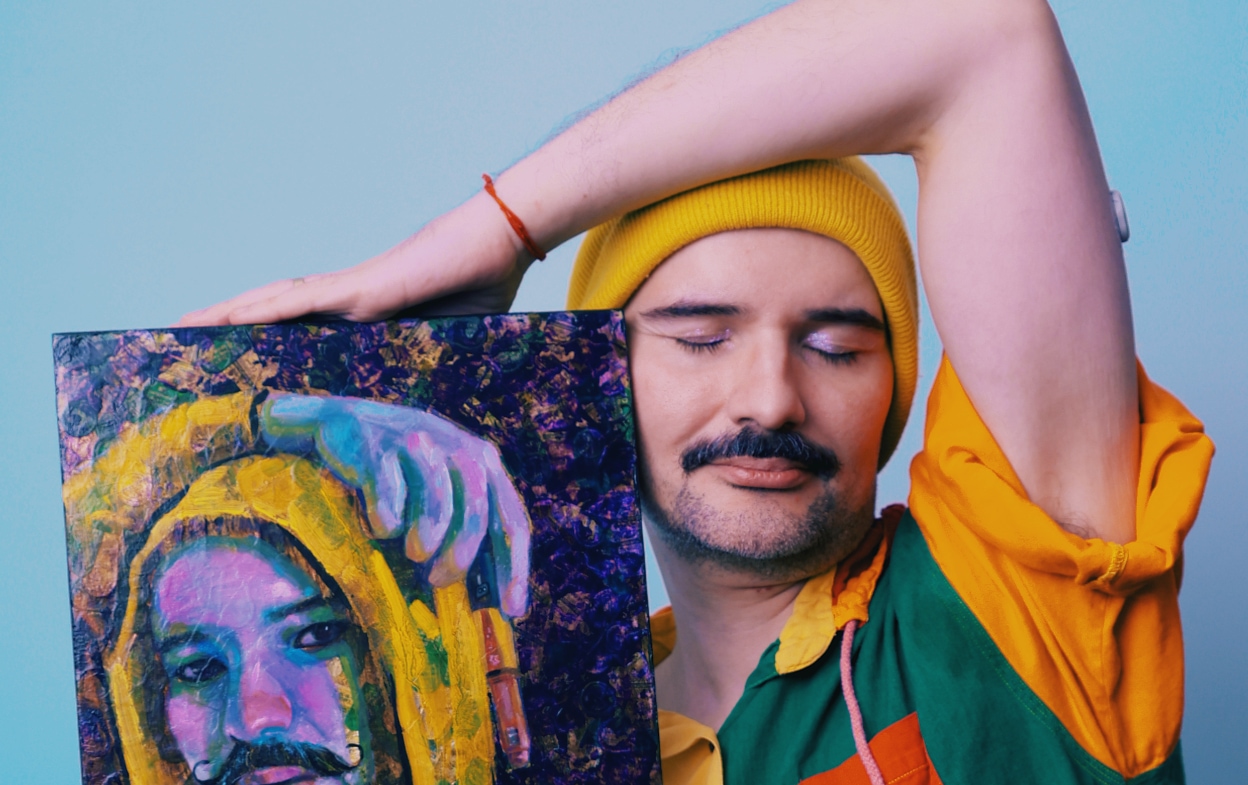
This is not a decorative effect. The ground determines the behavior of light across the whole work. It also resists the clean, frictionless image. My figures may begin as photographic montages of my own body, multiplied and rearranged, but they do not arrive on a neutral field. They arrive inside a material history.
That distinction matters. A body placed on a smooth backdrop can appear isolated. A body emerging from textured gesso carries its surroundings with it. Its context has already entered the paint.
The layers beneath the oil remain active
Before the oil phase, I build with mixed media in the order the feeling demands. Colored pencil brings fine line. Gouache gives a chalky resistance. Acrylic creates flat matte passages. Markers cut a graphic edge. Gesso returns as construction, covering and revealing what needs pressure.
These layers do not imitate oil, and they should not. Each has its own speed and its own refusal. Acrylic stays matte where oil later becomes luminous. Pencil can remain dry and exact beneath a transparent veil. Marker lines retain a directness that a brushstroke might soften too easily.
Then the oil enters. It does not erase the earlier materials. It edits their distance from the viewer.
A thin glaze of raw umber over a pale passage can send it backward. Buff titanium beneath a warmer transparent layer can create a light that seems held inside the surface. Ultramarine, used with restraint, can cool a surrounding field so that an ochre note moves forward without becoming louder. Depth is often a question of relation, not intensity.
How oil glazes create depth through transparency
A glaze is a thin, transparent or semi-transparent film of oil color applied over a dry layer. The eye receives light through that film, then encounters the color and texture beneath it. The result is not the same as mixing both colors together on a palette.
When pigments are mixed directly, they become one physical color. When they are layered transparently, they remain separate events. Light travels through one decision before meeting another. This creates optical complexity: color that appears to hover, shift, or glow from within the painting.
But a glaze is not automatically deep because it is transparent. If the layer beneath is muddy, the glaze can only make mud more polished. If the color is too opaque, the underpainting disappears. If the surface has no structural contrast, repeated glazing can produce a uniform darkness rather than space.
The question is always: what must remain visible?
Sometimes I need the grain of pencil to persist. Sometimes the matte interruption of acrylic is the point. Sometimes a black contour line must stay sharp, even as a translucent field moves across it. The line carries narrative. It binds separate versions of the body into one unstable, insistent image.
Color can recede without becoming passive
Depth is often misunderstood as a simple movement from light to dark. It is more exact than that. Temperature, transparency, saturation, and edge all alter where a color sits.
I return often to chromatic grays in backgrounds and across the body. They are not neutral. A gray made from complementaries has memory in it. It can carry a buried red, a restrained green, or a blue that remains active under brown. Black can desaturate a color quickly, but complementary mixtures can preserve more vibration. Which method I use depends on whether the passage needs silence or tension.
The red of pain in my work is not cadmium red. It is transparent alizarin crimson mixed with raw umber. Cadmium announces itself from the surface. Alizarin crimson and raw umber can appear to burn from inside the layers. The difference is emotional, but it is also technical. Transparency lets the red receive the marks and colors beneath it. It becomes accumulated rather than applied.
This is where a glaze can hold contradiction. It is thin, yet it changes the whole field. It is quiet, yet it makes color more difficult to escape.
Slow time is built, not illustrated
One glaze rarely completes a passage. I may add one, let it settle, then return with another adjustment. Each layer recalibrates what is above and below it. The process requires restraint. Too much medium can make a surface feel slick. Too many similar veils can flatten the structure. The answer is not endless transparency. The answer is a clear reason for each layer.
Within the oil phase, I follow fat-over-lean. Earlier oil layers contain less oil than later ones, so the final passages retain flexibility as the work develops. This is a practical discipline, but it also shapes the rhythm of the painting. The layers must have an order. They cannot all demand the same authority at once.
Accumulated glazes are chronic, slow time. They do not describe duration from a distance. They make duration visible in the surface itself. A passage may contain a scraped correction, a thin blue shadow, a warm veil, then a return to white. Nothing is fully gone. The painting holds its revisions without turning them into confession.
Impasto and sgraffito interrupt the illusion
Not every form should recede into transparent color. Impasto does the opposite. It occupies physical space.
I use impasto where a life needs weight: a raised edge, a compressed burst of white, a mark that refuses to lie flat. It catches real light in the room and breaks the illusion of depth created by glazing. This tension is necessary. A painting needs both the image that opens inward and the surface that insists on being here.
Sgraffito creates another kind of interruption. By cutting through a wet or layered passage, I expose what lies beneath. One sensation cuts through another. The mark can be abrupt, but it is not random. It brings the earlier painting back into the present.
Glaze, impasto, and sgraffito are not separate effects in my practice. They are different ways a surface can speak. One accumulates. One protrudes. One cuts back.
The figure is never only the figure
In Beyond the Contour and the continuing arc of Prismatic Identity, the multiplied body is a site of pressure, desire, memory, and self-authorship. Yet the meaning does not arrive before the matter. It comes through the way a transparent crimson field catches on gesso, the way a chromatic gray pulls one figure away from another, the way an opaque white refuses to behave like light.
A white can be bright and still carry shadow. A black line can contain motion. A thin glaze can make a painted body feel closer while placing it at a greater distance. These are not tricks. They are the formal conditions that allow complexity to remain visible.
For collectors, this is part of what changes over time with a painting. A glaze does not give everything at once. Morning light may reveal a pencil line. Evening light may bring out the raised gesso beneath a brown veil. The work continues to produce relations as the room changes around it.
The paintings are built for that sustained looking. New work remains part of an ongoing chapter, available directly from my studio when noted. Inquiries are open, and the collector list offers first access to forthcoming work.
Look closely at the surface before asking what the figure means. The answer often begins in the place where the pigment slows down.