Artist proofs can be a considered way to collect an editioned work, but only when the proof’s status, condition, and documentation are clear. This guide to collecting artist proofs begins with a simple rule: an AP is not automatically rarer, better, or more valuable than a numbered print.
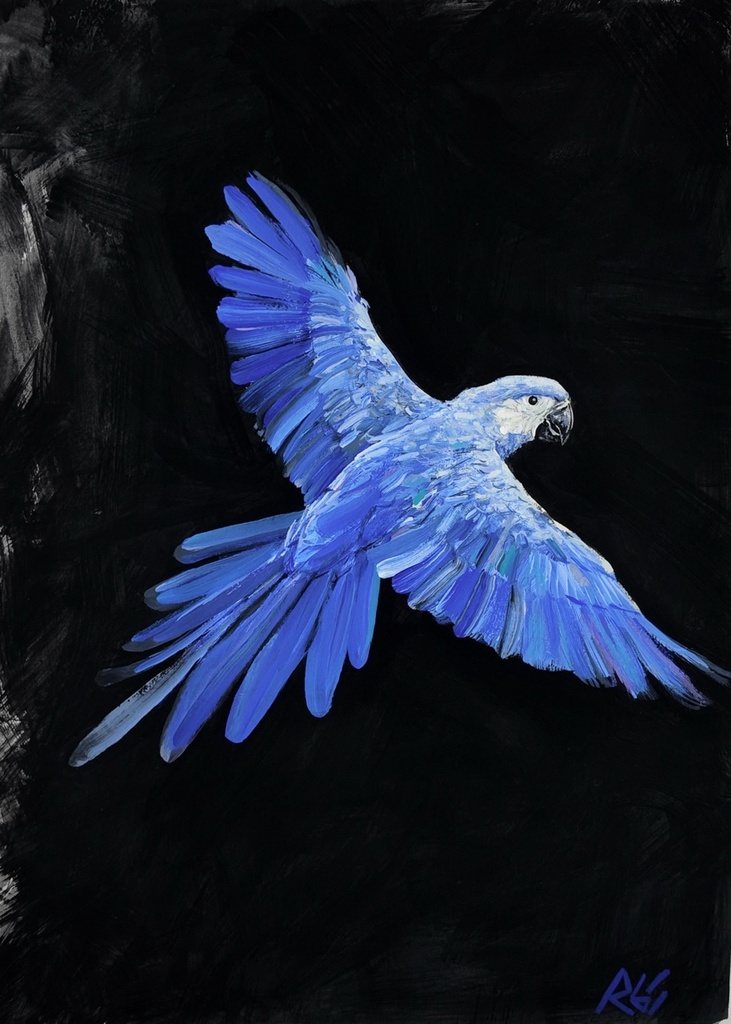
I think of Hummingbirds first: tropical birds held against a black field, where the darkness is not empty but active. In the original painting, a surface accumulates through colored pencil, gouache, matte acrylic, marker, gesso, and oil. A print carries an image from that physical history into another format. It does not replace the painting. It creates a different relationship to it.
That distinction matters when an edition includes artist proofs.
What an artist proof actually is
An artist proof, commonly marked AP or A/P, is a print set aside from the regular numbered edition for the artist. In older printmaking traditions, proofs were working impressions: sheets used to assess the plate, screen, color, paper, registration, or pressure before the edition was approved. Contemporary editions may still grow from that process, though the term can also describe a small, designated group produced to the same approved standard as the numbered run.
The mark is usually written by hand in the lower margin: “AP 1/5,” for example, rather than “1/50.” The fraction refers to the number of artist proofs in that AP group, not the full numbered edition. Sometimes a proof is marked simply “AP,” with no denominator. That is not necessarily a problem, but it should prompt a precise question about how many APs exist.
An artist proof is separate from other proof types. A printer’s proof is traditionally retained by the printer. A trial proof may record an earlier technical or visual decision. A BAT proof, short for bon à tirer, is the approved reference sheet used to guide the final edition. A monoprint is something else again: a unique print with variation built into its making. These labels are not interchangeable.
The paradox is simple: an artist proof can be less ordinary without being more important. Its value lies in what it is, not in a story of automatic scarcity.
Read the edition before you collect it
Before acquiring an AP, ask for the facts that establish its place in the edition. The answers should be straightforward. What is the total numbered edition size? How many artist proofs were designated? Are there printer’s proofs, trial proofs, or other sheets outside the numbered edition? Was the print signed, dated, and titled by hand? What process was used, and what paper or support carries the image?
A small edition can be meaningful, but a low number alone does not determine quality. A carefully produced edition of 50 may be more compelling than an undocumented AP from a much smaller run. Look for coherence between the image, the method, and the artist’s broader practice.
For collectors new to editions, the most useful documentation is usually a certificate of authenticity or an invoice that identifies the artist, title, year, medium, edition designation, sheet size or image size, and purchase source. Keep this material with the work. A signature is part of the object’s record, but provenance is the longer sentence around it.
Condition is not a minor detail
Prints are vulnerable at their edges. Examine the sheet in natural, indirect light before purchase when possible, or request clear front-and-back images when buying at a distance. Look for handling marks, fading, foxing, surface abrasion, rippling, stains, or changes to the paper around hinges and tape.
The margin deserves attention. A deckled edge, a blind embossment, a pencil inscription, or a printer’s chop can be integral to the work. Cropping a sheet inside a frame may make it easier to place on a wall, but it can remove evidence of the edition and compress the composition. This is a practical choice, not a neutral one.
Framing also changes how a print lives over time. Use archival materials and avoid direct sun. The goal is not to turn the work into a sealed relic. It is to let the paper and ink remain legible on their own terms.
Verify the source, not just the signature
The cleanest route is to acquire artist proofs directly from the artist’s studio, an established gallery, or a known print publisher. When a work appears on the secondary market, ask for its documented chain of ownership and any original sales materials. If the seller cannot identify the edition details, do not fill the gaps with optimism.
Be especially careful with vague language such as “limited edition,” “rare proof,” or “estate AP” when it is unsupported by records. A photograph of a signature is not enough. Neither is an edition number without a clear description of the edition as a whole.
There are cases where a work has a legitimate but imperfect paper trail. Older prints can change hands without every invoice surviving. In that situation, condition, the quality of the impression, the consistency of inscriptions, and the credibility of the seller all matter. It depends on your threshold for uncertainty and on whether the work remains persuasive without a promise of future resale.
Consider what the proof gives you
An AP may appeal because its number is smaller, because it was retained by the artist, or because the margin carries a personal dedication. Those can be real reasons to choose it. They should not obscure the first question: do you want to live with this image?
For my work, that question starts in the material language of the painting. The original ground is heavily textured gesso. Its ridges and drags decide how light behaves before the body is resolved. Oil comes last, as the final skin, after the work has moved through other materials in the order it demands. The black contour line carries the narrative around figures built from photographic montages of my own body, multiplied.
A print cannot duplicate every physical event on that surface. It can preserve a composition, a palette, a contour, and a particular pressure of looking. That difference is not a deficiency. It is the premise of the edition.
Consider I’m Perfect, But Unreal in those terms. The title does not offer perfection as a reward. It places it beside unreality, where self-image becomes both construction and refusal. An editioned work can make that image available to a collector at a different scale and price point than an original, while remaining part of the same ongoing arc.
Artist proofs and the question of value
Collectors often ask whether an AP will be worth more than a numbered print. Sometimes the market treats it that way, especially when APs are few, clearly documented, and connected to an important edition. Sometimes there is no meaningful difference at all. An AP from a poorly recorded edition may be harder to place than a numbered impression with excellent documentation.
Do not treat an artist proof as a financial instrument disguised as a print. Acquire it because the work has formal and cultural force, because the edition has been responsibly described, and because its presence in your collection makes sense beside what you already live with.
A direct relationship with an artist’s practice can clarify this. Ask whether the artist creates APs, how they are identified, and whether proofs are released separately from the regular edition. The answer may be no. That is useful information too. A disciplined edition policy protects collectors from confusion later.
Build a collection with enough room for questions
The best collecting decisions are specific. You may choose an AP because the inscription matters to you, a numbered edition because it is the available and fully documented impression, or an original because the surface itself is essential to what you see. None is a lesser choice when the object and its record are understood.
My originals, including works such as Ararinha Azul, Tuiuiú, and Peacock Feathers, are available through the studio according to current availability. Prints extend the work into another form. Inquiries are open when you want to ask about a particular piece, its format, and its documentation. Join the collector list for first access.
Collect the proof only after the questions have made the image sharper. Then the notation in the margin becomes what it should be: not a shortcut to value, but one precise fact within the life of a work.