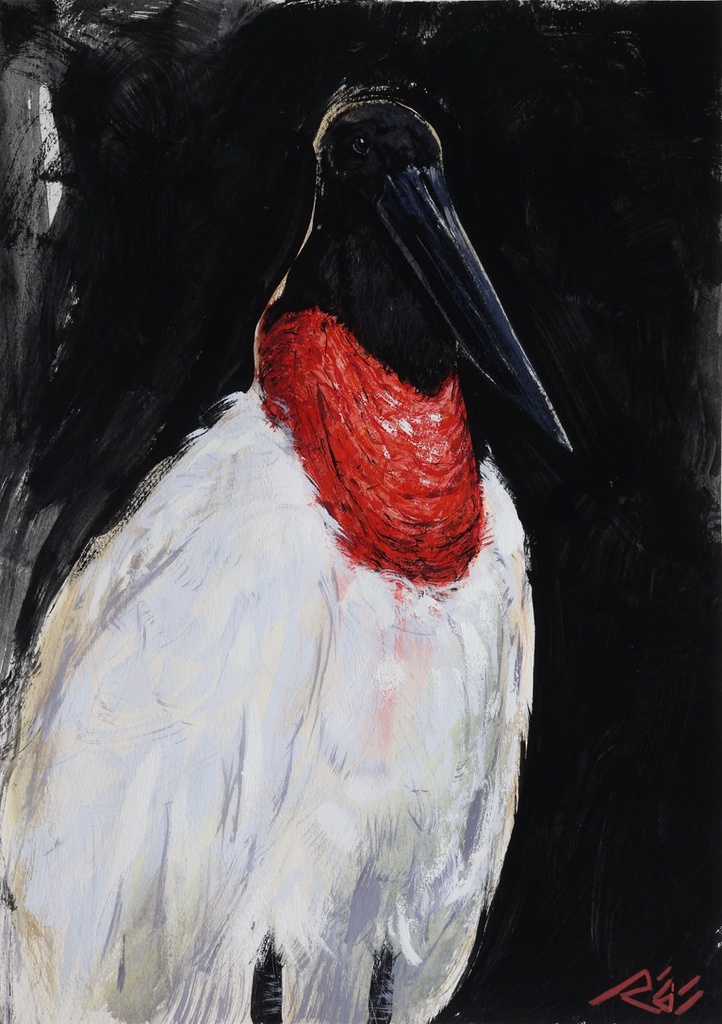
A painting begins with matter that will not stay silent. Gesso catches in ridges. Raw umber settles into a crevice. Oil becomes the final skin over earlier decisions. A guide to artist provenance begins there: with the evidence that a work was made, held, shown, and transferred with its history intact.
Provenance is not decorative paperwork. It is the record that keeps a painting connected to its author and its passage through the world. For collectors, it supports confidence at acquisition and clarity when a work is later loaned, exhibited, insured, or sold. For artists, it protects the integrity of a practice beyond the studio.
What Artist Provenance Actually Records
Artist provenance is the ownership and documentation trail attached to a specific work. At its clearest, it answers simple questions: Who made this? When was it made? What is its title, medium, and size? Where has it been? Who has owned it?
The answers do not always arrive in one document. A convincing provenance file is usually an accumulation: an invoice from the artist or gallery, a certificate of authenticity, installation photographs, exhibition materials, condition notes, collector correspondence, and records of later transfers. Each piece carries a different weight. Together, they make the work legible over time.
A signature can be useful, but it is not the whole story. Signatures change. They may be obscured by framing, applied on the reverse, or absent by intention. A certificate can also be useful, but a certificate without a clear issuer, matching artwork details, and supporting records proves less than collectors often assume.
The strongest provenance is specific. It names the work precisely and describes it in a way that cannot easily migrate to another object.
Why Provenance Matters Before and After a Sale
A collector does not acquire only pigment on canvas. They acquire a place within an artist’s continuing arc. That place should be documented with the same seriousness given to the physical work.
Good records establish authorship. They distinguish an original painting from a reproduction, a study, an unfinished work, or an edition. They also preserve context. A work that appeared in a solo presentation, a public installation, or a published archive carries that history forward. Exhibition history does not make every work more valuable by default, but it gives the work a public life that can be verified.
Provenance also reduces friction. Institutions and future buyers often need accurate details quickly: title, date, medium, dimensions, ownership, and exhibition record. When these facts are scattered across old emails or remembered imperfectly, the work becomes harder to place. When they are organized, its history can move with it.
There is a quieter reason, too. Contemporary art often enters collections while the artist’s language is still unfolding. The earliest record may become the clearest record. Keeping it protects nuance before the work is simplified into a caption or a price.
A Guide to Artist Provenance: What to Request
When acquiring directly from an artist, begin with a detailed sales invoice. It should identify the artist, artwork title, year, medium, dimensions, sale date, and purchase price. It should also state whether the work is unique or part of an edition. If it is an edition, request the edition number and total edition size.
A certificate of authenticity should correspond exactly to the invoice. Check the spelling of the title, the dimensions, and the medium. Small inconsistencies can create large questions later. If a work has mixed media beneath oil, that should be named rather than flattened into a vague description. Material truth matters.
Ask whether the work has been exhibited, published, or included in an artist archive. Request documentation where available. A checklist, catalog page, installation image, or studio record gives context without needing to turn a painting into a résumé.
For a direct studio acquisition, it is also reasonable to ask how the artist identifies works in their own records. Some use inventory numbers. Some archive photographs of the front, reverse, signature, and details. Some retain process images. There is no single universal system. The question is whether the system is coherent and whether the artwork can be matched to it.
Collectors should keep their own purchase records as carefully as the studio does. Save the invoice and certificate together, retain relevant correspondence, and photograph the work upon arrival, including the reverse and any inscriptions. If it is framed, keep framing details and receipts as well. This is not bureaucracy for its own sake. It is stewardship.
What a Strong Artwork Record Looks Like
A complete record should make the work identifiable even if it is separated from its frame or displayed decades later. The most useful files commonly include the following:
- Artist name, artwork title, year, medium, dimensions, and inventory number, if assigned.
- Clear photographs of the front, reverse, signature, inscriptions, and distinctive surface details.
- Original invoice and certificate of authenticity, with matching information.
- Exhibition, publication, and loan records, if applicable.
- A dated ownership trail, including any gallery or auction transaction and later transfer documents.
Keep digital copies in more than one secure place, and retain the originals in a dry, protected location. A scan is useful. The original invoice still matters.
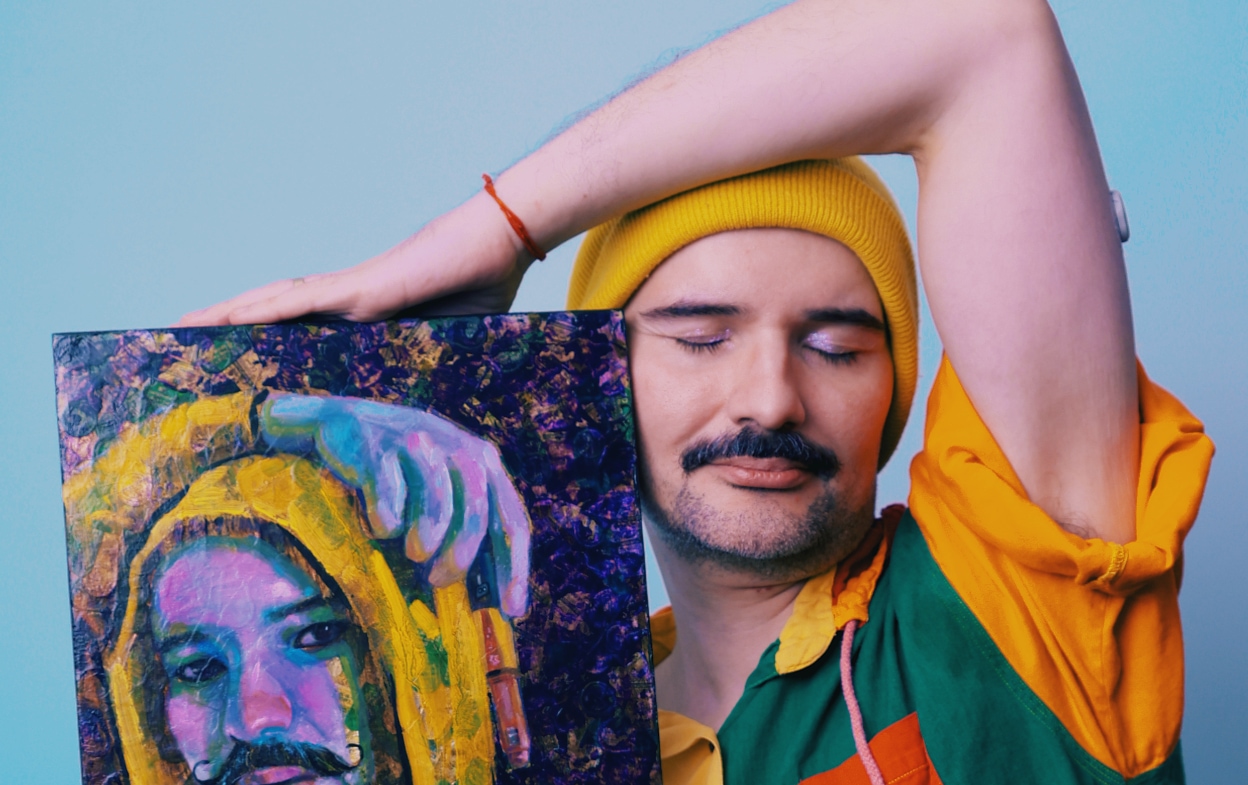
Photographs deserve particular attention. A full image establishes composition, but close images establish surface. In my paintings, the textured gesso ground comes before the figure. Colored pencil, gouache, acrylic, marker, and gesso may remain visible beneath the oil. Black contour lines carry the narrative. Those material decisions create identifying evidence no generic description can fully capture.
Provenance Is Not the Same as Condition
These records often travel together, but they answer different questions. Provenance concerns authorship, ownership, and history. A condition report describes the physical state of the work at a particular moment.
Both matter. If a work is resold or sent on loan, request a current condition report and compare it with earlier photographs. Do not alter, clean, or reframe a work without keeping a record of what was done and when. Future caretakers need to know what changed, even when the change was made with care.
This is especially relevant for textured surfaces. Impasto occupies physical space. Glazes hold slow time. Sgraffito can be a fine incision through one layer into another. A surface that appears irregular may be exactly as intended. Documentation helps distinguish the artist’s mark from a later alteration.
When the Provenance Trail Has Gaps
Not every work arrives with a perfect archive. Older works, private gifts, estate transfers, and early studio sales can carry incomplete records. A gap is not automatically a reason to walk away. It is a reason to ask better questions.
Start with what can be verified. Is there a direct connection to the artist, a recognized gallery, or a documented prior owner? Do the title, medium, dimensions, and photographs align across the available materials? Is the seller clear about what they know and what they do not know?
Be wary of certainty that has no paperwork behind it. A vague statement such as “from a private collection” is not provenance on its own. Neither is an undated certificate with no image or detailed description. Honest incompleteness is more useful than polished ambiguity.
For significant acquisitions with a complicated history, seek qualified independent advice before purchase. The goal is not suspicion as a posture. It is a record proportionate to the work, its history, and the decision being made.
The Artist’s Role in the Chain of Care
I keep records because a painting does not end when it leaves the studio. It enters another room, another collection, another set of eyes. Its materials continue to speak, and its history should remain available beside them.
For collectors, asking for documentation is not an awkward administrative request. It is a sign that you understand acquisition as a relationship with both artwork and artist. The most valuable record is not always the longest one. It is the one that stays exact: a title that matches, a surface that can be recognized, a transfer that is dated, a story that does not need embellishment.
A work should be able to carry its origin with quiet authority. Keep the papers. Keep the images. Let the painting keep its name.