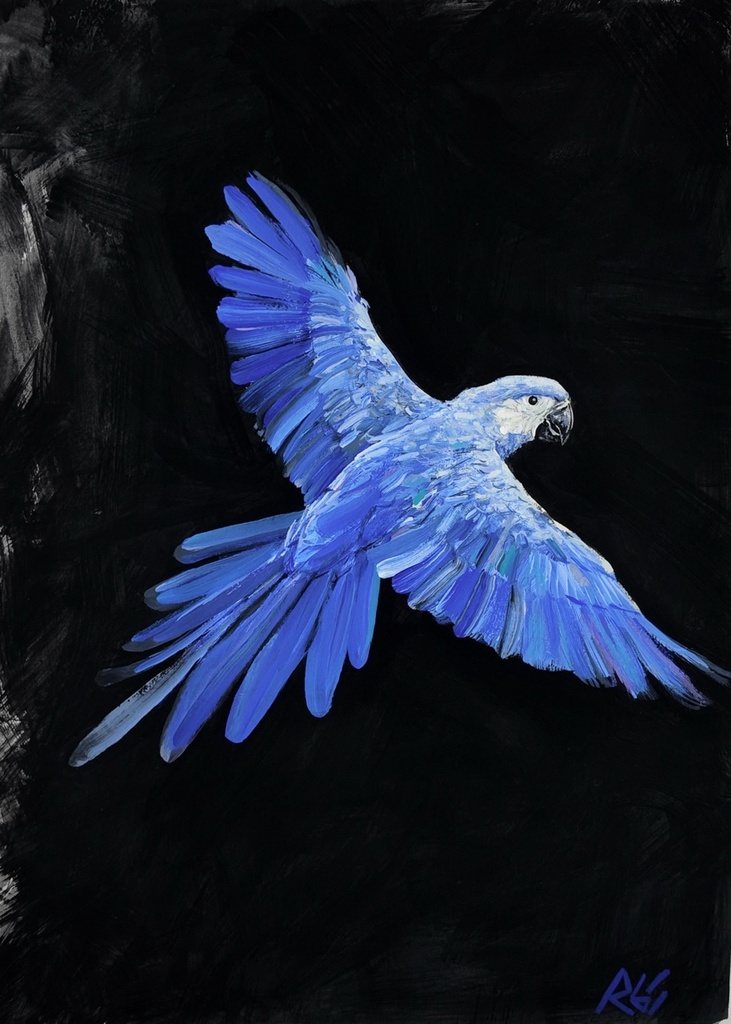
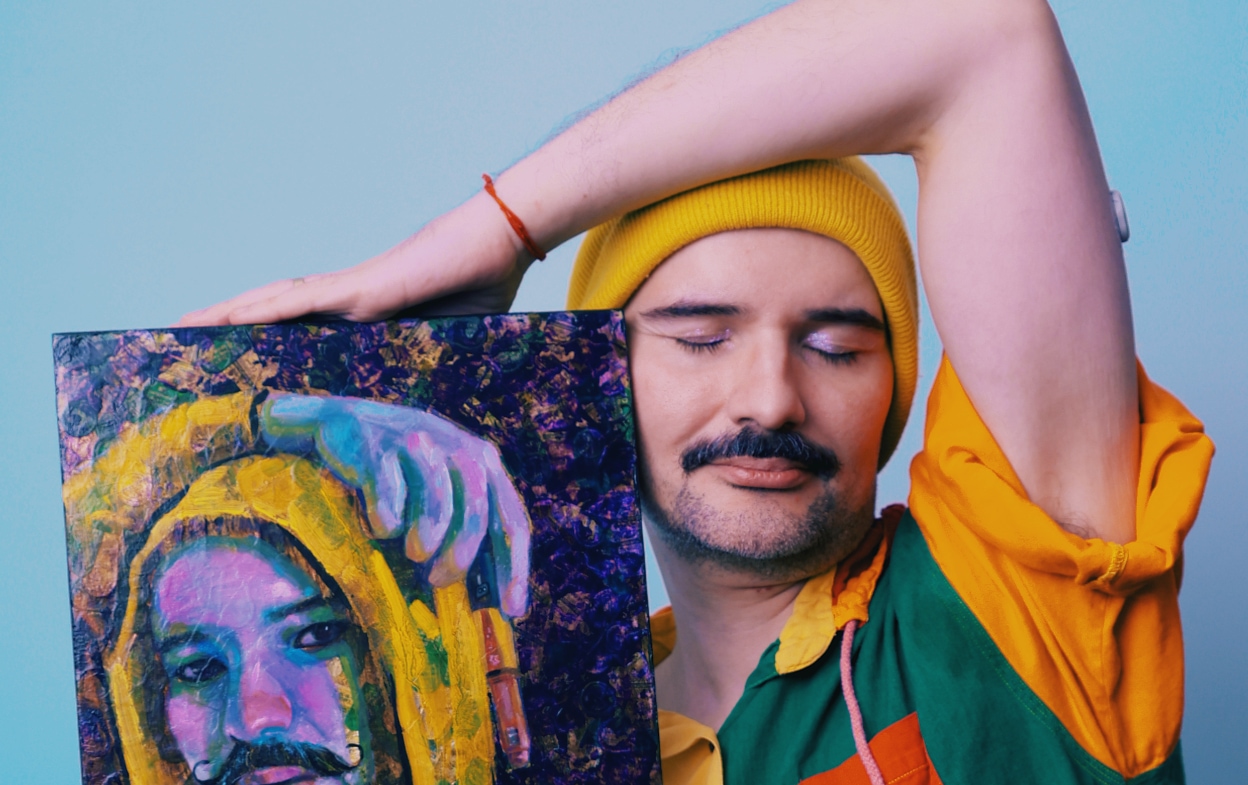
A painting begins with resistance. Before a figure enters the surface, I build a ground of gesso until it holds ridges, drags, and interruptions. Light catches there first. Brazilian diaspora art for sale should carry this kind of evidence: not a polished idea of belonging, but matter that has had to hold its position.
Texture is never background. It is biography.
I was born in Brazil and work from Toronto, but diaspora is not a route drawn cleanly between two points. It is a condition of overlap. Portuguese remains in the mouth. Canadian light changes the window. A childhood color returns without permission. The work does not resolve these things into a flag, a souvenir, or an easy statement about origin. It lets them remain active on the surface.
Brazilian Diaspora Art for Sale Is Not Decorative Distance
Collectors often encounter diasporic work through a familiar market language: place, heritage, color, identity. Those words can be useful, but they can also make an artist's life sound fixed and legible from a distance. I am interested in the opposite. A painting can be immediate and still refuse simplification. It can hold beauty without becoming decoration. It can name Brazil specifically without performing Brazilianness for an outside gaze.
That distinction matters when acquiring contemporary figurative art. The strongest work does more than place an image of culture in a room. It keeps revealing formal decisions, visual pressures, and lived contradictions over time. A figure may appear composed, yet the black contour line around it can suggest motion, conflict, or insistence. A bright field may feel open, then reveal itself as carefully interrupted by a chromatic grey.
This is where collecting becomes a sustained relationship rather than a transaction. The painting changes with the room, the hour, and the attention given to it. Its cultural specificity is not an accessory to its visual force. It is the reason the visual force has stakes.
Matter Comes Before the Figure
My paintings begin with a heavily textured gesso ground. I drag it, press it, and allow it to establish the first architecture of the work. These marks determine how light behaves across the entire painting. They are not corrected away when the figure arrives. They remain as a record of pressure.
Then I build mixed-media layers in the order feeling demands: colored pencil for fine line, gouache, acrylic for flat matte passages, markers for graphic insistence, and finish it all in oils. Each material has a different refusal. Gouache can sit dry and opaque. Acrylic can establish a plane with no illusion of depth. Marker can declare a boundary. Fresh gesso can cover, divide, and rebuild.
Only then does oil complete the painting. Oil is the final skin, not the first gesture. During this phase, fat-over-lean governs the construction. That order is practical, but it is also conceptual. Nothing here arrives untouched. Every final passage has to negotiate what is already beneath it.
I work with raw umber, yellow ochre, burnt sienna, ivory black, buff titanium, titanium white, cadmium yellow, cadmium red, magenta, and ultramarine. One of my favorites red is not cadmium red. It is transparent alizarin crimson mixed with raw umber, glowing from inside the layers. Black and complementary colors desaturate the palette. Chromatic greys recur in the background and in the figure. A white can be bright without being innocent. A brown can carry heat without becoming earthiness as cliché.
Impasto occupies physical space. It is what a life cannot flatten. Glazes allow time to gather slowly. Sgraffito is one sensation cutting through another. For a collector, these are not incidental techniques. They are the reasons an original painting cannot be reduced to its image on a screen.
The Multiplied Figure and the Diasporic Gaze
The figures in my work begin as photographic montages from my memory, multiplied and reassembled. They are not portraits in the conventional sense. They are propositions. One figure becomes several. A gesture splits across a composition. Black contour lines carry a narrative from one form to another.
This multiplication has a particular charge within queer diasporic experience. A self is not singular because it is fragmented. It becomes multiple because it has learned to move between languages, codes, landscapes, and expectations. The figure can be exposed and self-authored at once. It can hold desire and discipline in the same frame.
Brazilian cultural memory enters through specificity rather than spectacle. It may arrive through the density of a color relationship, the force of a line, the social language of a pose, or the persistence of Portuguese within an English-speaking city. I do not use memory as a stable archive. Memory changes as it is carried. So does the image.
This ongoing tension moves through Prismatic Identity and continues into the larger arc of my work. The painting is not asking permission to be queer, Brazilian, diasporic, or formally ambitious. It is already all of those things. The question is whether the surface can bear their simultaneous weight.
What to Look for When Acquiring Brazilian Diaspora Art
The first question is not whether a painting matches a wall. It is whether its material language remains compelling after the first encounter. Look closely at the ground. Notice where a contour has been interrupted, where an opaque passage sits against a glaze, where color has been withheld. A work with strong presence does not need to announce itself loudly. It holds attention through decisions that continue to unfold.
Scale matters, but not as a simple measure of impact. A smaller work can feel concentrated, almost pressurized. A larger painting can alter the pace of an entire room. Consider where you will meet the work most often, how daylight moves across it, and whether you want an image that anchors a space or complicates it. There is no universal right choice. The right scale depends on the relation between the painting, the architecture, and your own habits of looking.
Original works and prints offer distinct forms of access. An original holds the full physical history of its surface: the raised gesso, the matte interruptions, the oil glazes, the irregular decisions visible at close range. A print can bring a work's image and narrative into a collection with a different spatial and financial consideration. Neither needs to be treated as lesser in cultural value. They simply offer different encounters with the practice.
Provenance also matters. Acquiring directly from an artist creates a clear line between the work, its context, and its ongoing life. You can ask about medium, dimensions, year, series, handling, and placement. You can understand where the painting sits within a continuing body of work rather than treating it as an isolated object. This is especially meaningful for collectors who want to follow an artist's development over years, exhibitions, and new chapters.
A Painting That Keeps Its Edge
Diaspora is often described as longing for elsewhere. That is only part of it. It is also invention. It is making form from what travels, what remains, what becomes unreadable, and what returns with a different color.
At Régis Souto Arts, original paintings and prints are available directly from the studio. Inquiries are open for works that speak to your collection, and the collector list offers first access to new chapters. https://www.regissoutoarts.com/shop
Choose the work that continues to ask something of your eye. Let it keep its edge. Let it make the room more exact.