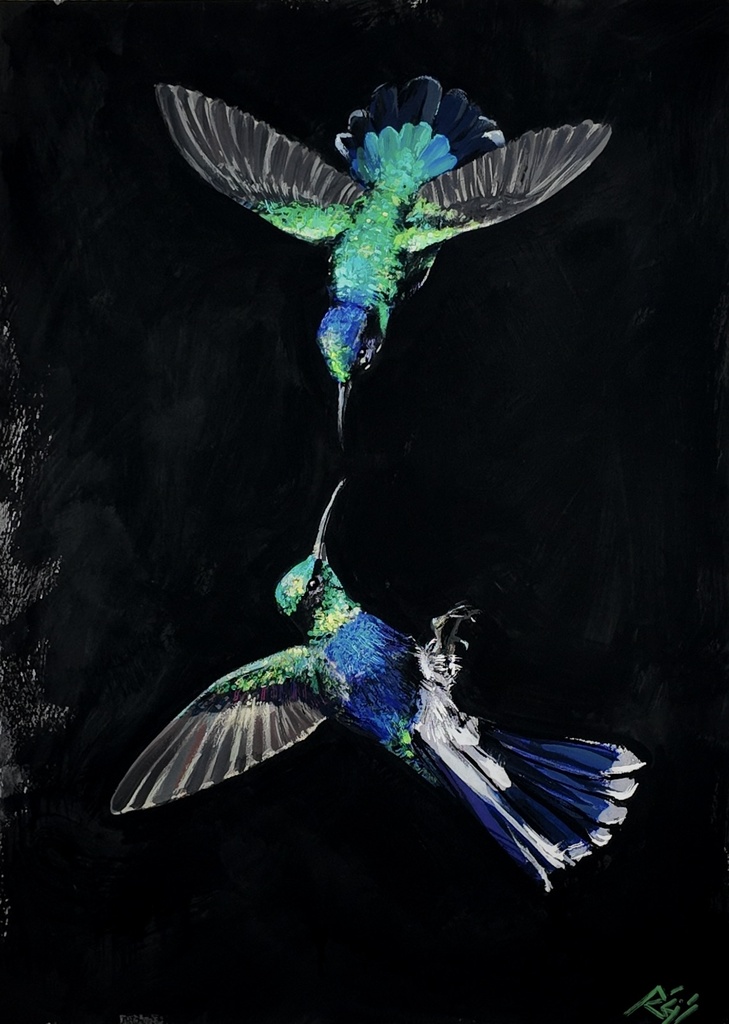
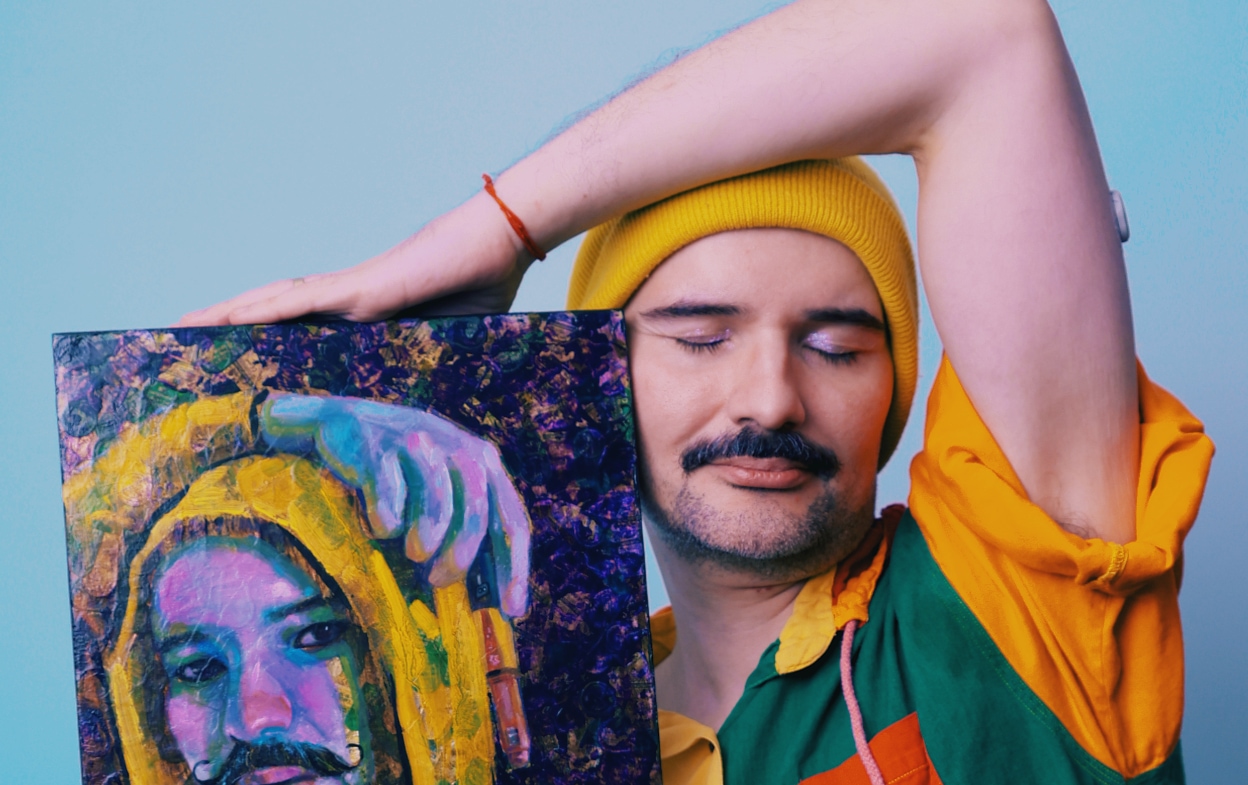
A painting begins with what will not stay smooth. Gesso is pulled, dragged, and left to hold the light in uneven ways. Before the figure arrives, the surface has already made decisions.
The same is true of collecting. A work carries its own material evidence: the hand in the paint, the sequence of layers, the signature, the history of where it has been. A certificate can clarify that history. It cannot create it.
For collectors asking, are certificates necessary, the honest answer is conditional. They are useful. Often they are wise. But their meaning depends on who issued them, what they record, and whether they sit beside a credible chain of documentation.
Are Certificates Necessary for Original Art?
For a contemporary work acquired directly from the artist, a certificate of authenticity is not always necessary to establish authorship. The transaction itself can be strong evidence when it includes an invoice, written correspondence, studio records, images of the work, and clear identifying details. A collector who acquires a painting from my studio is entering the work's record at its source.
Still, I believe a certificate has real value. It gives the work a concise, durable identity outside the moment of sale. It can record the artist's name, title, year, medium, dimensions, edition information where relevant, and a unique reference number. It may also identify the buyer and date of acquisition.
That document is particularly useful when a work changes hands years later. Memory thins. Emails disappear. Estates become complicated. A well-kept certificate gives future owners, advisors, and institutions a clear starting point.
But a certificate is not a magic object. A vague piece of paper with no supporting record is weaker than an invoice from a known gallery, a studio archive entry, and a documented exhibition history. Paper matters. Context matters more.
What a Certificate Can Actually Confirm
A legitimate certificate of authenticity should be specific enough to distinguish one work from another. “Original painting by artist” is not enough. A serious record describes the particular work, not an idea of the work.
For an original painting, that usually means title, date, dimensions, medium, signature placement, and an image or reference number. If the piece belongs to an ongoing series, the certificate should name that context. A work from Prismatic Identity is not detached from its larger arc. It carries that chapter with it.
A certificate can also establish whether a work is unique or part of an edition. This distinction matters for prints. An open-edition print, a limited edition, an artist proof, and a unique mixed-media work are not interchangeable categories. Their value and scarcity are structured differently.
The document should also make clear who issued it. The strongest issuer is generally the artist, the artist's studio, an authorized representative, or an established gallery handling the work. For older works, an archive, estate, foundation, or recognized specialist may be the appropriate authority.
Provenance Is More Than a Certificate
Provenance is the documented ownership history of an artwork. It can include invoices, gallery labels, correspondence, exhibition checklists, catalog entries, photographs of an installation, and records of prior sales. It is the life of the work after it leaves the studio.
A certificate often forms one part of that life. It does not replace the rest.
Collectors sometimes inherit the idea that provenance must be grand to matter: a major museum, a famous collection, a catalog with a heavy cover. Those records are valuable, but contemporary art begins more quietly. A studio invoice from 2026 can be the first link in a future lineage. Save it. Keep the certificate with it. Preserve the email confirming the work's title and date.
This care is not bureaucracy. It is stewardship.
For artists working across painting, digital image, performance, and video, documentation can become even more essential. A painting has physical evidence. Time-based work needs instructions, files, installation requirements, and clarity about display rights. The certificate or accompanying documentation must describe what is being acquired, not merely state that something was sold.
When You Should Be Cautious
A certificate deserves scrutiny when the work is offered through a secondary seller and the artist, studio, gallery, or estate is absent from the transaction. It also deserves scrutiny when its language is generic, its details do not match the work, or the issuer has no clear authority.
Be cautious if a seller treats a certificate as the only proof required. Ask for the invoice, previous gallery information, publication or exhibition records, and a direct explanation of how the work entered their possession. A careful seller should be able to answer plainly.
There is also a difference between a certificate and an appraisal. A certificate addresses identity and authorship. An appraisal offers an opinion of market value at a particular time. One is not a substitute for the other.
For emerging collectors, this distinction can prevent an expensive misunderstanding. You are not only acquiring an image for a wall. You are taking responsibility for an object with a record, a maker, and a future.
The Artist's Record Is the First Archive
In my studio, a painting moves through materials that cannot be separated from its meaning. Heavily textured gesso establishes the ground. Colored pencil makes its fine line. Gouache, acrylic, marker, and gesso return as construction. Oil becomes the final skin.
That sequence is part of how I identify the work. So are the photographic montages made from my own figure, multiplied across the composition, and the black contour lines that carry the narrative. Raw umber, yellow ochre, burnt sienna, chromatic gray, and transparent alizarin crimson mixed with raw umber all leave their particular evidence. The red of pain is not cadmium. It glows from inside the layers.
A certificate can name these materials, but it cannot contain their full presence. That is why direct knowledge of an artist's practice is valuable. It allows a collector to understand not only what they own, but how the work insists on being read.
For collectors, this is also an argument for acquiring from artists and trusted galleries whenever possible. You gain proximity to the source. You receive accurate information while the work is still close to the conditions of its making. You become part of the archive at its beginning rather than trying to reconstruct it later.
What to Keep After You Acquire a Work
Keep the certificate, invoice, shipping records, and all correspondence together. Photograph the front and back of the artwork, including any signature, label, or inscription. Record its dimensions and condition when it enters your collection.
If the work is exhibited, loaned, reframed, or transferred to another owner, add those details to its file. Small records accumulate into reliable provenance. This is especially useful for a collector building a focused collection over time, where each acquisition speaks to the next.
Store documents away from direct light and moisture, and keep digital copies in more than one location. If a certificate is lost, contact the issuing artist, studio, or gallery. A replacement may be possible, but it should be marked as a replacement and connected to the original studio record.
The Better Question
Are certificates necessary? Sometimes. Are records necessary? Always.
A certificate is most valuable when it is one clear note in a larger archive: artist, work, date, materials, ownership, and care. It protects neither the collector nor the artwork by itself. What protects both is attention.
Collect the painting with its story intact. Keep the paper, but keep the relationship to the work alive too. That is how an object becomes part of a collection with a future.